Roch Marc Christian Kaboré Biography: Early Life, Age, Education, Career & Personal Life

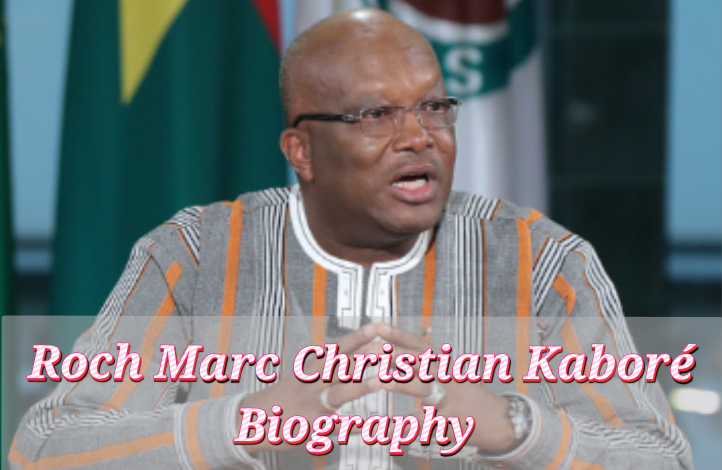
Roch Marc Christian Kaboré Biography
Roch Marc Christian Kaboré stands out as a key figure in the history of Burkina Faso, a landlocked country in West Africa known for its rich cultural heritage and ongoing struggles with stability. Born in a time when his homeland was still under French colonial rule, Kaboré rose from humble beginnings to become the nation’s president, serving from 2015 to 2022. His journey reflects the broader challenges faced by many African nations, including shifts from colonial rule to independence, economic reforms, and battles against insecurity.
In January 2022, soldiers took control of the government in Ouagadougou, the capital, removing Kaboré from power due to growing frustrations over jihadist attacks that had plagued the country. This event marked the end of his presidency but not the end of his influence in Burkinabé politics. As the first civilian leader without direct military ties in almost 50 years, Kaboré symbolized a hope for democratic progress in a region often marked by coups and authoritarian rule. His story is one of ambition, loyalty, and eventual conflict with former allies, set against the backdrop of Burkina Faso’s turbulent path since gaining independence in 1960.
This article aims to provide a clear and detailed look at Kaboré’s life, focusing on his background, achievements, and the events that shaped his career. By exploring these aspects, readers can better understand how personal choices intersect with national history in West Africa. Key themes include political transitions, economic development, and the fight against extremism in the Sahel region, which stretches across several countries including Mali, Niger, and Burkina Faso. The Sahel faces ongoing threats from groups linked to al-Qaeda and the Islamic State, leading to displacement and hardship for millions.
Kaboré’s significance lies in his role as a bridge between old and new eras in Burkina Faso. He started in banking, moved into government under long-time leader Blaise Compaoré, and later broke away to form his own party. This shift highlighted tensions between maintaining stability and pushing for change. His presidency saw efforts to boost the economy and improve governance, but it was overshadowed by security failures that ultimately led to his ouster. Despite this, Kaboré remains a respected voice in discussions about democracy and peace in the region.
To make this easy to follow, the article uses simple words and short sentences. It draws on reliable facts from historical records and avoids guesses about unconfirmed events. For instance, his deposition on January 24, 2022, came after military mutinies sparked by dissatisfaction with handling jihadist insurgencies. Readers interested in West African politics will find value in seeing how one person’s path mirrors larger regional trends, such as the wave of coups in the early 2020s. By the end, you will have a solid grasp of who Kaboré is and why his story matters today.
Burkina Faso, formerly known as Upper Volta, has a population of about 22 million people, with many relying on agriculture like cotton farming. Kaboré’s policies aimed to support these sectors, but challenges like climate change and conflict hindered progress. His legacy encourages reflection on what makes effective leadership in fragile states. As we delve deeper, keep in mind the LSI terms like Burkinabé leadership, West African democracy, and Sahel security crises, which help connect his story to broader topics.
Roch Marc Christian Kaboré Early Life and Education
Roch Marc Christian Kaboré was born on April 25, 1957, in Ouagadougou, the bustling capital of what was then French Upper Volta. This territory would later become independent Burkina Faso in 1960. His family background played a big role in shaping his future. His father, Charles Bila Kaboré, held important positions, including serving as a minister under President Maurice Yaméogo and as Deputy Governor of the Central Bank of West African States, known as BCEAO. This connection to finance and government exposed young Kaboré to ideas about economics and public service from an early age.
Growing up in a Mossi family, the largest ethnic group in Burkina Faso, Kaboré experienced a blend of traditional values and modern influences. The Mossi people have a long history of organized kingdoms, which might have instilled in him a sense of structure and leadership. He also came from a Catholic household, attending religious schools that emphasized discipline and education. From 1962 to 1968, he completed primary school and earned his Certificate of Primary School, a basic milestone that opened doors to further learning.
Kaboré then enrolled at Collège Saint Jean-Baptiste de la Salle in Ouagadougou, a well-regarded institution run by Catholic brothers. He studied there from 1968 to 1975, passing his BEPC exam in 1972, which is similar to a general certificate at the O-level, and his baccalauréat in 1975, equivalent to A-levels. These years were formative, teaching him core subjects like math, languages, and history amid the post-independence excitement in Burkina Faso. The country was navigating its new freedom, with leaders like Yaméogo facing challenges such as economic dependency on France.
Seeking higher education, Kaboré traveled to France, a common path for many African elites at the time due to colonial ties. He attended the University of Dijon, focusing on economics with a specialization in business administration. In 1979, he obtained his bachelor’s degree, followed by a master’s in economics and business management in 1980. This period abroad broadened his perspective, exposing him to global economic theories and practices. He engaged with student groups, including left-leaning ones like the Union of Communist Struggles Reconstructed, which influenced his views on social justice and development.
His education in France was crucial because it equipped him with skills in finance and management, fields that were vital for a developing nation like Burkina Faso. Upon returning home, he applied this knowledge in practical ways. For readers unfamiliar with the context, Upper Volta’s economy in the 1970s relied heavily on subsistence farming and aid, so trained economists like Kaboré were in demand to help build institutions.
Roch Marc Christian Kaboré Career
Kaboré’s professional journey began in the financial sector, where he quickly made his mark. After completing his studies in France, he joined the International Bank of Burkina, or BIB, in the early 1980s. By 1984, at just 27 years old, he rose to the position of General Director, a role he held until 1989. This was during the revolutionary period under President Thomas Sankara, who focused on radical reforms like land redistribution and anti-corruption drives. Kaboré oversaw banking operations that supported these changes, helping to stabilize the economy amid efforts to reduce foreign dependence.
His work at BIB involved managing loans, deposits, and international transactions, skills that proved essential for Burkina Faso’s growth. The country faced droughts and poverty, so efficient banking was key to funding projects in agriculture and infrastructure. Kaboré’s expertise in economics helped implement policies that aimed for self-sufficiency, aligning with Sankara’s vision.
In 1989, following Sankara’s assassination and the rise of Blaise Compaoré, Kaboré transitioned into government. He was appointed Minister of Transports and Communications, a post he held until 1990. This role involved improving roads, telecoms, and transport systems, crucial for a landlocked nation relying on neighbors like Ivory Coast for trade. From 1990 to 1992, he served as Minister of State, gaining broader experience in administration.
His career advanced further when he became Minister of Finance and Planning from 1992 to 1993. Here, he managed budgets, taxes, and development plans, working to attract investments and control inflation. Burkina Faso’s economy grew modestly during this time, with GDP increases linked to mining and cotton exports. Kaboré’s background in business administration helped in negotiating with international bodies like the World Bank.
In 1994, he was named Prime Minister, serving until 1996. As head of government, he coordinated policies under Compaoré, focusing on economic liberalization to encourage private enterprise. This period saw privatization of state companies and efforts to reduce poverty through social programs. However, critics noted growing inequality and reliance on aid.
After his premiership, Kaboré remained active in politics, joining the Congress for Democracy and Progress, or CDP, Compaoré’s party. He became its National Secretary in 1999 and President in 2003. From 2002 to 2012, he led the National Assembly as its President, overseeing laws on education, health, and security. This role strengthened his reputation as a consensus builder.
Tensions arose in 2014 when Compaoré sought to amend the constitution for another term. Kaboré opposed this, resigning from the CDP on January 6, 2014. He founded the People’s Movement for Progress, or MPP, on January 25, 2014, attracting defectors and positioning it as a reformist party. The MPP emphasized democracy, anti-corruption, and social justice, resonating with youth disillusioned by long-term rule.
The 2014 uprising forced Compaoré out, leading to a transitional government under Michel Kafando. Kaboré’s MPP gained momentum, and in the November 2015 elections, he won the presidency with 53.5 percent of the vote against Zephirin Diabré’s 29.7 percent. Sworn in on December 29, 2015, he became the first non-military president in decades.
His first term focused on economic growth, appointing Paul Kaba Thieba as Prime Minister in 2016. Policies included infrastructure projects like roads and schools, plus anti-corruption measures. However, jihadist attacks from groups like al-Qaeda in the Islamic Maghreb intensified, displacing thousands and straining resources.
Despite challenges, Kaboré won reelection in November 2020 with 57.74 percent. His second term saw continued efforts on security, including military reforms and regional cooperation with ECOWAS. But protests grew over perceived failures in handling insurgency and corruption allegations.
On January 24, 2022, a coup led by Paul-Henri Sandaogo Damiba deposed him, citing insecurity. Kaboré was detained until April 2022, when ECOWAS pressure led to his release to house arrest, and later full freedom. Post-presidency, he has stayed low-key but remains influential in political circles.
Throughout his career, Kaboré navigated alliances and breaks, from banking reforms to presidential leadership. His story underscores the complexities of governance in West Africa, where economic ambitions meet security threats.
Roch Marc Christian Kaboré Personal Life and Legacy
In his personal sphere, Kaboré maintains a close-knit family. He met his wife, Sika Bella Kaboré, while studying in France, and they married upon returning to Burkina Faso. They have three children, blending family life with public duties. Sika has been involved in social causes, particularly women’s rights and health, supporting her husband’s career without seeking the spotlight.
Kaboré’s Catholic faith influences his values, promoting community and ethics. He enjoys reading on economics and history, staying informed on global affairs. Health-wise, he has faced no major public issues, remaining active into his late 60s.
His legacy is mixed but significant. As a banker turned politician, he contributed to financial stability and democratic transitions. Critics point to his time under Compaoré, associating him with authoritarian elements, yet his 2014 break showed commitment to change. During presidency, he advanced education and infrastructure, but security lapses led to his fall.
Today, Kaboré is seen as a symbol of resilience, inspiring future leaders on balancing tradition and progress. His work with MPP continues to shape Burkinabé politics, emphasizing inclusive governance.
Conclusion
Roch Marc Christian Kaboré’s life offers lessons on leadership in challenging times. From early education to presidency and beyond, he embodied Burkina Faso’s hopes and struggles. His story encourages ongoing dialogue on democracy and security in West Africa.
FAQs
What is Roch Marc Christian Kaboré’s background?
He was born on April 25, 1957, in Ouagadougou to a family with political ties. His father was a minister and banker, influencing his path in economics and governance.
How did Roch Marc Christian Kaboré become president?
He won the 2015 election with 53.5 percent after founding the MPP and opposing Compaoré’s term extension, marking a democratic shift.
Why was Roch Marc Christian Kaboré overthrown?
On January 24, 2022, a military coup removed him due to failures in addressing jihadist insurgencies and military discontent.
What was Roch Marc Christian Kaboré’s relationship with Blaise Compaoré?
He served in key roles under Compaoré, like Prime Minister and Assembly President, but split in 2014 over constitutional changes.
Where is Roch Marc Christian Kaboré now?
Released from house arrest in April 2022, he lives freely in Burkina Faso, with permission to travel, maintaining a low profile.
What is Roch Marc Christian Kaboré’s family like?
Married to Sika Bella Kaboré, with three children; his family supports social issues while keeping a private life.