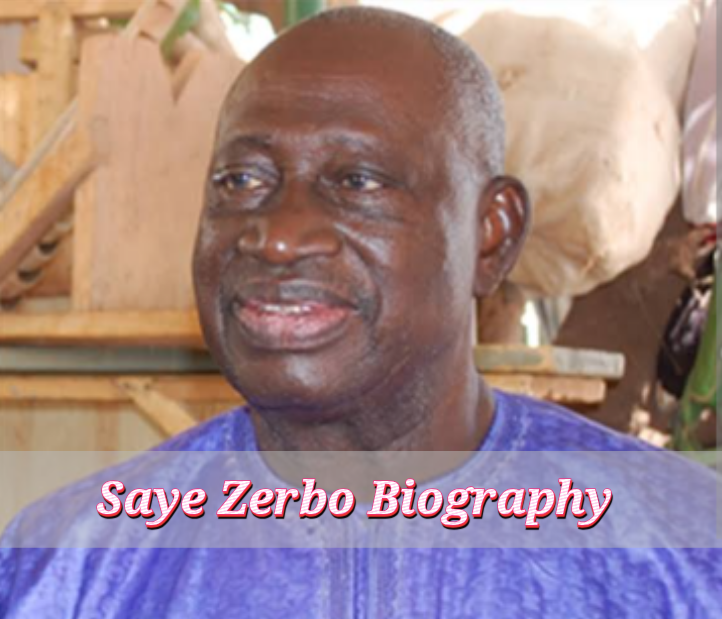
Saye Zerbo Biography: Early Life, Education, Age, Personal Life & Career
Saye Zerbo Biography
Saye Zerbo was a key figure in the history of Burkina Faso, a country in West Africa once known as Upper Volta. He served as a military leader and president during a time of great change and challenge. Born in 1932, Zerbo rose through the ranks of the army and took control of the government in 1980 through a peaceful takeover. His time in power lasted only two years, but it left a mark on the nation’s politics and economy. This article looks at his life to help readers understand how military leaders shaped post-colonial Africa.
Burkina Faso gained independence from France in 1960. In the years that followed, the country faced problems like drought, poverty, and unstable governments. Zerbo stepped in during one such unstable period. He aimed to fix corruption and improve the economy, but his strict rules led to opposition. His story connects to other leaders like Sangoulé Lamizana, who he replaced, and Thomas Sankara, who later became famous for his revolutionary ideas.
Advertisements
Saye Zerbo Early Life and Education
Saye Zerbo was born on August 27, 1932, in the small town of Tougan, located in Sourou Province of what was then French West Africa. This area is now part of Burkina Faso. He grew up in a rural setting, part of the Samo ethnic group. Life in colonial times was tough, with limited chances for education and work. His family background remains private, but it is known that his parents were local people in a village environment.
As a child, Zerbo went to school in nearby Mali and later in Saint-Louis, Senegal. These places were under French control, and education followed the colonial system. Students learned French language and basic subjects. This schooling helped shape his worldview and prepared him for a career in the military. At age 18, in 1950, he joined the French army. He trained at the famous Saint-Cyr military academy in France, where he became a paratrooper. This training gave him skills in combat and leadership.
His early years happened during a time when Africa was pushing for independence. France ruled many West African countries, and young men like Zerbo often joined the military for steady jobs. His education mixed local culture with French influences, which later affected his political views. For example, he understood both traditional African ways and modern military tactics. This blend helped him rise quickly in the army after his country became free.
Readers should note that Zerbo’s path was common for many African leaders of his time. They started in colonial forces and then served their new nations. His story teaches about how education under colonialism led to roles in independent governments. By keeping things simple, we see how his beginnings set the foundation for big changes later.
Saye Zerbo Career
Saye Zerbo’s career focused on military service and politics, spanning over three decades. He started in the French army and ended up leading his country. Let’s break it down step by step.
Advertisements
First, his military days began in 1950 when he enlisted. As a paratrooper, he fought in two major wars. The First Indochina War lasted from 1946 to 1954, where French forces battled for control in Southeast Asia. Zerbo was there, gaining experience in tough battles. Then, from 1954 to 1962, he took part in the Algerian War, helping France against independence fighters. These experiences made him a skilled soldier.
When Upper Volta gained independence on August 5, 1960, Zerbo moved to the new national army in 1961. He held important posts under President Sangoulé Lamizana, who took power in 1966 after a coup. Zerbo became commander of the army regiment in Ouagadougou, the capital city. He also led the military intelligence service, which involved gathering information on threats.
In politics, Zerbo served as Foreign Minister from February 11, 1974, to February 9, 1976. In this role, he handled relations with other countries, especially France and neighbors in Africa. This job gave him insight into government workings and built his network.
The big turning point came on November 25, 1980. Zerbo led a bloodless coup against President Lamizana. The country faced economic problems, drought, and strikes by workers. Lamizana had won an election in 1978, but many people were unhappy. Zerbo’s takeover was quick and without violence. He set up the Military Committee of Recovery for National Progress, or CMRPN, to run the government. He became both president and prime minister.
During his presidency from 1980 to 1982, Zerbo tried to fix the nation’s issues. He promised to stop corruption and boost the economy. His plans included strict budget controls, better management of state companies, and cleaning up public services. He suspended the 1977 constitution, which meant no elections or political parties for a while. He also froze workers’ salaries and banned strikes, which upset trade unions.
At first, some young officers supported him, like Thomas Sankara, Blaise Compaoré, and Henri Zongo. Sankara even became Secretary of State for Information. But soon, disagreements arose. On April 8, 1982, Zongo resigned. Sankara followed on April 12, 1982, saying, “Woe to those who gag their people.” Compaoré also left. The three were arrested and sent into exile. This showed growing opposition to Zerbo’s harsh rules.
Zerbo’s foreign policy kept ties with France strong, as he had trained there. He worked on regional issues in West Africa too. However, inside the country, protests grew. Trade unions, who liked the coup at first, turned against him because of the strike ban.
His rule ended on November 7, 1982, when Major Jean-Baptiste Ouédraogo led another coup. This created the Council of Popular Salvation, or CSP. Zerbo was removed and put in prison. This event was part of a series of military takeovers in Upper Volta during the 1980s.
After his fall, in May 1984, a court tried Zerbo and Lamizana for crimes like stealing money. He got a 15-year sentence. But in August 1985, after Sankara’s coup on August 4, 1983, Zerbo was freed. Later, on February 18, 1997, the supreme court of Burkina Faso canceled his conviction.
In his later career, Zerbo advised Blaise Compaoré, who took power in 1987 after killing Sankara. This shows how old leaders stayed involved in politics.
Zerbo’s career highlights the role of the military in African politics after independence. Many countries saw coups because of weak economies and corruption. His actions, like austerity measures, aimed to help but often hurt ordinary people. By looking at his path, readers learn about the challenges of governing a young nation.
Saye Zerbo Personal Life
Saye Zerbo kept much of his personal life private, but some details stand out. He was born into the Samo ethnic group and started as a Muslim. During his time in prison from 1984 to 1985, he changed his religion to Christianity. This shift happened while he reflected on his life behind bars. A documentary called “Come To The Light” tells about this change, showing his journey from one faith to another.
In family matters, Zerbo had a daughter named Araba Kadidiatou Zerbo. She married Paramanga Ernest Yonli, who later became prime minister of Burkina Faso. This link connected Zerbo to later governments. Little else is known about his home life, as he focused on military and political duties.
His personal choices, like the religion switch, show how tough times can lead to big changes. This part of his story adds a human side to his public role.
Saye Zerbo Death and Legacy
Saye Zerbo passed away on September 19, 2013, in Ouagadougou, the capital of Burkina Faso. He was 81 years old. His death marked the end of an era for those who remembered the early days of independence.
Zerbo’s legacy is mixed. He is seen as a leader who tried to fight corruption and fix the economy during hard times. His 1980 coup brought hope to some, like traditional chiefs who wanted unity. But his strict policies, such as banning strikes and freezing pay, made him unpopular. This led to his quick downfall in 1982.
He played a part in the chain of coups that shaped Burkina Faso. After him came Ouédraogo, then Sankara, who renamed the country and started big reforms. Zerbo’s time set the stage for Sankara’s revolution. Some view him as an authoritarian who limited freedoms, while others see him as a reformer in a tough spot.
Today, historians study Zerbo to understand military rule in Africa. His story teaches about the need for balance between order and rights. In Burkina Faso, his name reminds people of the unstable 1980s and the push for better governance.
Conclusion
Saye Zerbo’s life tells a story of ambition, power, and change in Burkina Faso. From a small town boy to president, he faced wars, coups, and prison. His efforts to improve his country had both good and bad results. By reading about him, we learn valuable lessons on leadership and history. For more on African leaders, check out stories of Thomas Sankara or Blaise Compaoré.
FAQs
Where was Saye Zerbo born?
Saye Zerbo was born in Tougan, Sourou Province, in what was then French West Africa, on August 27, 1932. This place is now in Burkina Faso.
What wars did Saye Zerbo fight in?
He fought in the First Indochina War from 1946 to 1954 and the Algerian War from 1954 to 1962, as a paratrooper in the French army.
How did Saye Zerbo come to power?
He came to power through a bloodless coup on November 25, 1980, ousting President Sangoulé Lamizana amid economic and political troubles.
What were Saye Zerbo’s policies as president?
As president, he focused on austerity, anti-corruption, better state management, salary freezes, and suspending strikes and the constitution.
Why did Thomas Sankara resign under Saye Zerbo?
Thomas Sankara resigned on April 12, 1982, because he disagreed with Zerbo’s policies that limited freedoms, saying “Woe to those who gag their people.”
How was Saye Zerbo overthrown?
He was overthrown in a coup on November 7, 1982, by Major Jean-Baptiste Ouédraogo, who set up the Council of Popular Salvation.
What happened to Saye Zerbo after his presidency?
After his presidency, he was imprisoned in 1982, tried in 1984, sentenced to 15 years, released in 1985, and his conviction was annulled in 1997.
Did Saye Zerbo go to prison?
Yes, he went to prison after his 1982 overthrow, served time until 1985, and converted to Christianity there.
How did Saye Zerbo die?
He died on September 19, 2013, in Ouagadougou, Burkina Faso, at age 81.
What is Saye Zerbo’s legacy?
His legacy includes efforts to combat corruption but also criticism for authoritarian rule, influencing the cycle of coups in Burkina Faso.