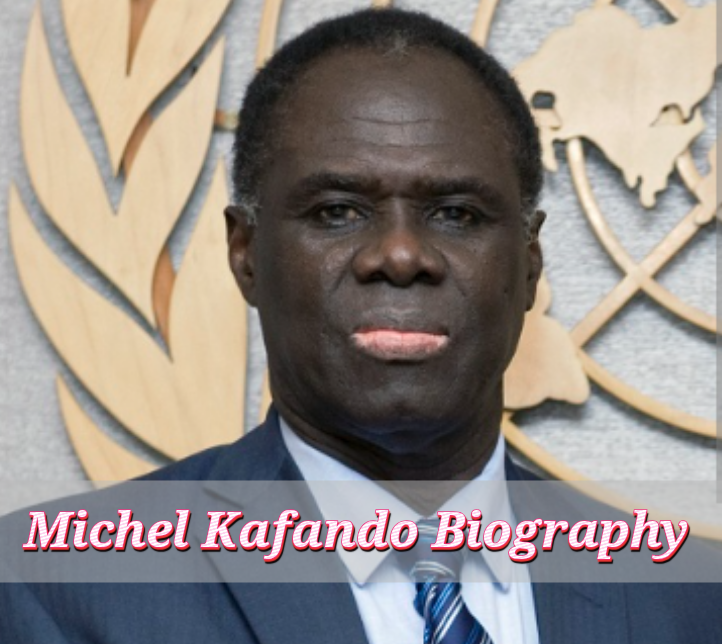
Michel Kafando Biography: Early Life, Education, Age, Personal Life & Career
Michel Kafando Biography
Michel Kafando stands out as an important person in the history of Burkina Faso. He worked as a diplomat and politician who played a big role in helping his country during a period of major change. Born on August 18, 1942, in Ouagadougou, which was part of French Upper Volta at the time, Kafando grew up in what would become an independent nation. His story highlights how learning and commitment can lead to high positions in government and global affairs.
Burkina Faso went through a tough time in 2014. The president who had been in power for 27 years, Blaise Compaoré, wanted to change the rules to stay longer. People rose up in protests, and he had to leave office on October 31, 2014. This was called the 2014 Burkina Faso uprising. The country then needed someone to lead it toward new elections. A group of civilian and military leaders picked Kafando as the interim president on November 17, 2014. He started his duties on November 18. His main task was to keep peace and set up fair voting.
Advertisements
Kafando’s presidency had ups and downs. In September 2015, members of the Regiment of Presidential Security launched a coup and held him captive. After a short time, with help from the army and talks, he returned to his role on September 23, 2015. He continued until December 29, 2015, when the newly elected president, Roch Marc Christian Kaboré, took over.
Before that, Kafando built a solid career in diplomacy. He served as Foreign Minister from 1982 to 1983. He represented Burkina Faso at the United Nations from 1998 to 2011. During 2008 and 2009, he was the president of the UN Security Council. These roles let him work on issues like peace in Africa.
Kafando’s efforts strengthened Burkina Faso’s ties with other countries. His experience shows the value of steady leadership in difficult situations. He always aimed for peace and democratic ways. This article will cover his early years, schooling, professional path, private life, and key lessons. It is meant to teach readers about his contributions to politics in Africa and diplomacy worldwide.
To understand his background, note that Burkina Faso is in West Africa. It became free from France in 1960 and changed its name from Upper Volta in 1984. Kafando lived through colonial rule, independence, and modern challenges. His work in 2014 and 2015 prevented more chaos and paved the way for elections with high voter turnout.
People often wonder what makes Kafando notable. He is recognized for steering Burkina Faso’s shift to democracy. His quiet style during the crisis earned praise from global leaders. Later, he served as UN Special Envoy to Burundi from 2017 to 2019, continuing his peace work.
Advertisements
This opening part prepares you for more details on his life. We will see how his roots and learning led him to become a trusted leader in times of need.
Michel Kafando Early Life and Education
Michel Kafando was born on August 18, 1942, in Ouagadougou. Back then, it was known as French Upper Volta, under French control. Ouagadougou is the main city, and it was growing even in those days. As a child, Kafando witnessed the push for independence across Africa.
His childhood occurred when many African nations were seeking freedom. Upper Volta gained independence in 1960, right when Kafando turned 18. Such events probably sparked his curiosity in politics and world relations.
Kafando began his schooling at Jean-Baptiste de la Salle College in Ouagadougou. He studied there from 1956 until 1963. He finished high school and got a bachelor’s in sciences. This early training taught him to think logically and tackle issues.
Next, he traveled for higher studies. In 1969, he earned a bachelor’s in public law at the University of Bordeaux, France. Public law covers government operations and citizen rights. It was perfect for his later career.
By 1972, he received a diploma in political science from the Institute of Political Studies in Paris. This field examines governments, laws, and global events. At the same time, he attended the Graduate Institute in Geneva, Switzerland. Also in 1972, he obtained a diploma in diplomacy from the Carnegie Endowment for International Peace in Geneva. Diplomacy involves negotiations between countries.
Much later, in 1990, he achieved a doctorate in political science from the University of Paris Sorbonne. This advanced degree proved his expert knowledge.
Kafando studied in Senegal, France, and Switzerland. He picked up several languages and experienced various cultures. This broadened his view on international matters.
His focus on law, politics, and diplomacy equipped him for government and global jobs. Studying overseas gave him unique insights rare in his home country then.
In post-independence Africa, education mattered a lot. Leaders like Kafando brought back skills from Europe to build their nations. His journey demonstrates education’s power to create opportunities.
Overall, Kafando’s youth in Ouagadougou and his academic pursuits laid a firm foundation. He used this to serve Burkina Faso and the international community.
Michel Kafando Career
Michel Kafando started his professional life in 1972 by joining Burkina Faso’s Ministry of Foreign Affairs. He took on tasks related to global partnerships. Between 1976 and 1981, he was director of international cooperation, then director of international relations, and finally director of international organizations. These positions taught him about teamwork between nations.
In 1981, he became the Permanent Representative of Burkina Faso to the United Nations, serving until 1982. He voiced his country’s views at UN gatherings.
From 1982 to 1983, he acted as Foreign Minister. He managed relations with other countries. In 1982, he also served as Vice-President of the UN General Assembly.
He worked as Ambassador to Cuba, strengthening links with that nation.
In 1998, he went back to the UN as Permanent Representative, staying until 2011. In 2008 and 2009, he presided over the UN Security Council. The Council handles world peace matters, and he led discussions on African conflicts.
At the UN, Kafando contributed to decisions that affected peace in the region. His speeches and votes helped address issues like wars and development.
After normal diplomatic work, he was brought back in 2014. The uprising on October 31, 2014, ended Compaoré’s rule. Protests started because he wanted to amend the constitution for more terms. Thousands marched in Ouagadougou, burning buildings and forcing him to flee. The military stepped in, but soon handed to civilians. On November 17, 2014, Kafando was selected as interim president. He was inaugurated on November 18.
He named Yacouba Isaac Zida prime minister. They aimed to reform and hold elections. Kafando focused on unity and fairness.
On September 16, 2015, the Regiment of Presidential Security, under Gilbert Diendéré, carried out a coup. They opposed disbanding their unit. Kafando was held, but public outcry and army action led to his return on September 23, 2015. He then dissolved the regiment to ensure stability.
The elections on November 29, 2015, were successful. Kaboré won with over 53 percent of votes. Kafando transferred power on December 29, 2015. This marked a peaceful change, rare in the area.
In May 2017, he became UN Special Envoy to Burundi. He aided in resolving political tensions there until 2019.
Kafando’s key career moments include:
- Entering the Foreign Ministry in 1972.
- UN Permanent Representative in 1981 to 1982 and 1998 to 2011.
- Foreign Minister in 1982 to 1983.
- Leading UN Security Council in 2008 to 2009.
- Interim president during 2014 to 2015 transition.
His actions supported democracy and peace. He proved diplomacy can fix problems, influencing West African politics.
The 2014 events were part of a wave of changes in Africa, like in Mali. Kafando’s neutral stance helped avoid violence. His UN experience brought international support from groups like the African Union.
Today, his work is studied as an example of transitional leadership. He added value to Burkina Faso by ensuring elections happened on time, with high participation.
Michel Kafando Personal Life
Information on Michel Kafando’s private life is limited, as he prefers to keep it out of the public eye. He is married and the father of two children. Born in 1942, he has spent most of his life in public roles.
Kafando knows several languages, aiding his diplomatic tasks. His family probably provided support during his many trips and demanding jobs.
He resides in Burkina Faso, though his career involved stays in places like New York for UN work. At 83, he likely spends time with loved ones after decades of service.
His character reflects in his focus on integrity and duty. He stayed clear of controversies, prioritizing his responsibilities.
Conclusion
Michel Kafando’s journey offers lessons in commitment to nation and global harmony. From 1942 birth to diplomatic and presidential duties, he influenced Burkina Faso’s democratic progress.
His schooling readied him for challenges. Professionally, he excelled at the UN and led through crisis in 2014 and 2015.
Personal info is scarce, but his impact is evident. He advanced smooth changes and world partnerships.
Burkina Faso honors him as a reliable guide in turmoil. His example motivates upcoming leaders in Africa and elsewhere. Studying him helps understand how one person can promote positive shifts in politics.
FAQs
What is Michel Kafando known for?
Michel Kafando is recognized for his interim presidency in Burkina Faso from 2014 to 2015, guiding the democratic transition. He also had significant UN roles, including Security Council president.
How did Michel Kafando become president?
Following the 2014 uprising that ousted Blaise Compaoré, a selection committee appointed him interim president on November 17, 2014. He assumed office on November 18.
What happened during the 2015 Burkina Faso coup?
Soldiers from the presidential guard, led by Gilbert Diendéré, seized power on September 16, 2015, detaining Kafando. He was freed and reinstated on September 23 after interventions.
What was Michel Kafando’s role in the UN?
He served as Permanent Representative from 1998 to 2011 and presided over the Security Council in 2008-2009. In 2017, he became Special Envoy to Burundi.
Who succeeded Michel Kafando?
Roch Marc Christian Kaboré followed him after the 2015 elections. The handover occurred on December 29, 2015.
How old is Michel Kafando?
In 2026, Michel Kafando is 83 years old, born August 18, 1942.
What challenges did Michel Kafando face?
He dealt with the 2015 coup and the pressure to organize credible elections amid instability. His diplomacy helped overcome these.
How has Michel Kafando influenced Burkina Faso today?
His transition work set a precedent for peaceful power shifts. It inspires current efforts for stability in the region.