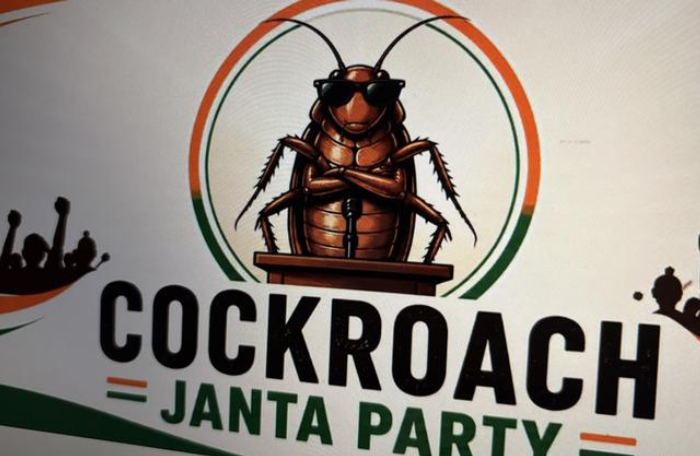
Cockroach Janta Party: The Viral Political Movement That Turned Satire Into a National Conversation
Indian politics has witnessed countless political parties, protest movements, and youth campaigns over the decades. Yet very few have erupted into public consciousness as rapidly and unexpectedly as the Cockroach Janta Party. What began as a sarcastic response to controversial public remarks soon transformed into one of the most talked-about internet-driven political movements in India.
Within days of its creation, the movement flooded social media timelines with memes, slogans, parody posters, and viral videos. Young people embraced it enthusiastically, while critics dismissed it as political theatre wrapped in internet humour. Television channels debated it, journalists analysed it, and political observers questioned whether it represented genuine public frustration or merely another passing online trend.
Advertisements
At the centre of the movement stood Abhijeet Dipke, a political communication strategist who understood how modern internet culture could shape political conversations more effectively than traditional speeches or campaign rallies. Through humour, satire, and digital mobilisation, the Cockroach Janta Party captured the attention of millions.
This article examines the origins, ideology, popularity, controversies, public reception, and long-term significance of the Cockroach Janta Party, as well as the broader questions it raises about youth politics, online activism, and the future of political communication in India.
What Is the Cockroach Janta Party?
The Cockroach Janta Party, commonly abbreviated as CJP, is a satirical political movement launched in India in 2026. The movement gained massive online traction after being introduced by political communication strategist Abhijeet Dipke during a period of widespread public debate surrounding youth unemployment and controversial political remarks.
Although it initially appeared to be a parody campaign, the movement quickly evolved into something larger. Thousands of young Indians began engaging with the party’s messaging online, using its slogans and symbols to express frustration with political institutions, economic hardship, unemployment, and perceived elitism.
Unlike traditional political organisations, the Cockroach Janta Party relied almost entirely on digital engagement rather than physical rallies or formal membership structures. Its strength came from social media virality, meme culture, and emotionally resonant messaging aimed primarily at younger audiences.
Advertisements
The movement’s name itself was deliberately provocative. By embracing the insult “cockroach”, supporters attempted to reclaim a term they believed symbolised how ordinary citizens — especially unemployed youths — were treated by powerful institutions.
The Origin of the Cockroach Janta Party
The origins of the Cockroach Janta Party can be traced to a controversy involving remarks that many social media users interpreted as insulting towards unemployed young people.
Public outrage intensified online after judges’ comments in India’s judiciary sparked widespread criticism. While some people demanded apologies or political responses, Abhijeet Dipke chose a different approach entirely. Rather than launching a conventional protest campaign, he turned the controversy into satire.
The idea was simple but effective: if ordinary citizens were allegedly being viewed as insignificant or disposable, why not reclaim the label and turn it into a symbol of resistance?
That idea became the foundation of the Cockroach Janta Party.
What initially began as a humorous social media concept soon exploded into a viral movement. Internet users started creating memes, campaign posters, mock manifestos, and satirical speeches. Hashtags linked to the movement began trending across multiple platforms.
Within a short period, the movement had evolved from an online joke into a nationwide political conversation.
Why the Name “Cockroach”?
The unusual name immediately attracted attention.
Cockroaches are often associated with survival, resilience, and adaptability. Supporters of the movement used these characteristics symbolically to describe ordinary people struggling within difficult economic and political conditions.
The name also reflected the movement’s anti-establishment tone. It challenged social hierarchies and mocked political elites by embracing a word commonly used in a derogatory sense.
Many young supporters interpreted the symbolism in the following way:
- Cockroaches survive under harsh conditions
- They are difficult to eliminate
- They continue to exist despite hostility
- They represent ignored populations living on the margins
The movement transformed this symbolism into political satire.
One of its most viral slogans, “Main Bhi Cockroach”, became particularly popular among students and unemployed youths online.
The Role of Abhijeet Dipke
No discussion about the Cockroach Janta Party is complete without examining the role of Abhijeet Dipke.
Dipke, who studied journalism and public relations, reportedly worked in political communication before launching the movement. His background in digital media strategy played a crucial role in the campaign’s rapid growth.
Unlike conventional political organisers, Dipke understood the psychology of internet audiences. He recognised that younger people respond more strongly to humour, satire, short-form content, and emotionally charged messaging than to lengthy ideological speeches.
His communication strategy included:
- Meme-driven narratives
- Satirical campaign branding
- Viral slogans
- Social media engagement
- Mock political posters
- Internet humour blended with criticism
This approach allowed the movement to spread rapidly among Generation Z audiences.
Many political commentators noted that Dipke’s methods reflected a broader transformation in modern political communication, in which online engagement increasingly matters more than traditional campaigning.
Social Media and the Rise of Digital Politics
The success of the Cockroach Janta Party demonstrated how significantly politics has changed in the social media era.
In previous decades, political influence depended heavily on television appearances, newspaper coverage, and large public rallies. Today, a viral post can shape national discourse within hours.
The Cockroach Janta Party relied on:
- Instagram reels
- Twitter/X hashtags
- Meme pages
- Viral video clips
- Satirical graphics
- Digital communities
This digital-first strategy allowed the movement to spread at remarkable speed.
Several factors contributed to its online popularity:
Humour
People are more likely to share funny content than formal political speeches.
Simplicity
The movement’s slogans were short, memorable, and emotionally direct.
Relatability
Young people connected with the frustrations being expressed.
Memes and parody graphics are naturally designed for rapid distribution.
Anti-Establishment Energy
The movement appealed to people dissatisfied with existing political structures.
The campaign proved that internet culture can now influence public debate in ways once reserved for major media organisations.
Youth Frustration and Unemployment
One of the major reasons behind the movement’s popularity was its connection with growing economic anxiety among young Indians.
Across India, many graduates and job seekers face intense competition, limited opportunities, and rising financial pressure. For many young people, the Cockroach Janta Party became a symbolic outlet for frustration.
The movement touched on several issues affecting youth, including:
- Unemployment
- Rising living costs
- Competitive examination pressures
- Political disillusionment
- Economic uncertainty
- Perceived institutional indifference
Even people who did not fully support the movement often admitted that it captured genuine public dissatisfaction.
Its humour masked a deeper political message.
Satire as a Political Weapon
Satire has always played a role in politics, but the Cockroach Janta Party used it in a distinctly modern way.
Rather than relying on traditional political criticism, the movement turned absurdity into a strategy. Fake campaign posters, exaggerated promises, parody speeches, and sarcastic slogans became central tools.
This style appealed particularly to internet-native audiences who consume political information through memes and short-form content.
The movement blurred the line between comedy and activism.
Supporters argued that satire made politics more accessible and exposed hypocrisy more effectively than formal debates. Critics, however, accused the movement of trivialising serious national issues.
Regardless of opinion, the strategy worked.
Public Reaction to the Cockroach Janta Party
Public reactions to the movement were deeply divided.
Supporters Viewed It As:
- A voice for frustrated youths
- A clever protest movement
- A symbol of anti-elitism
- A modern form of political expression
- A challenge to conventional politics
Critics Saw It As:
- Internet sensationalism
- Political opportunism
- Oversimplified activism
- A meme rather than a movement
- A publicity stunt
Television debates further amplified the controversy. News channels invited political analysts, activists, and social media commentators to discuss whether the movement represented a meaningful shift in political engagement or simply reflected internet outrage culture.
The more criticism it received, the more attention it gained online.
Political Connections and Speculation
As the movement became more influential, attention turned towards Abhijeet Dipke’s political background.
Reports surfaced linking him to previous volunteer work with the Aam Aadmi Party’s social media operations. This sparked speculation that the Cockroach Janta Party might secretly favour opposition politics.
Dipke repeatedly insisted that the movement was independent and not officially aligned with any major political party.
Nevertheless, critics continued questioning the movement’s neutrality.
This controversy added another layer to the public fascination surrounding the campaign.
Meme Culture and Political Communication
The Cockroach Janta Party reflected the increasing importance of meme culture in political communication.
Memes are no longer simply entertainment. They shape opinions, spread narratives, and influence public perception.
The movement successfully used:
- Irony
- Sarcasm
- Pop culture references
- Humorous visuals
- Viral catchphrases
- Internet language
This communication style felt more authentic to younger audiences than polished political speeches.
Traditional politicians often struggle to connect with internet-native generations because their messaging feels formal and detached. The Cockroach Janta Party succeeded precisely because it communicated in the language of the internet.
The Influence of Artificial Intelligence
Reports also suggested that artificial intelligence tools may have played a role in the movement’s content creation process.
Observers speculated that AI-assisted tools were used for:
- Generating slogans
- Drafting campaign ideas
- Producing satirical concepts
- Creating social media captions
- Structuring manifesto content
Whether fully accurate or not, these discussions reflected an important reality: AI is increasingly influencing political communication worldwide.
The Cockroach Janta Party became part of a broader conversation about technology, algorithms, and modern activism.
Criticism and Controversies
No viral movement escapes controversy, and the Cockroach Janta Party was no exception.
Allegations of Political Bias
Critics argued that the movement selectively targeted particular institutions while appearing softer towards opposition narratives.
Concerns About Oversimplification
Some analysts believed the movement reduced serious political and economic issues into meme-friendly slogans.
Questions About Seriousness
Many people questioned whether the movement had any real political agenda beyond internet visibility.
Online Toxicity
As the movement gained popularity, some supporters engaged in aggressive online behaviour, which critics argued damaged constructive debate.
Hacking Allegations
Abhijeet Dipke later claimed that attempts had been made to hack or interfere with movement-related social media accounts.
Despite these controversies, public curiosity surrounding the movement continued to grow.
Can Satirical Movements Become Real Political Forces?
One of the most interesting debates surrounding the Cockroach Janta Party concerns whether satirical political movements can eventually become legitimate political forces.
History shows that protest movements often begin outside traditional political systems. Humour, satire, and cultural symbolism have frequently played important roles in activism around the world.
The question is whether internet-driven political communities can sustain momentum beyond viral moments.
For the Cockroach Janta Party to evolve into a serious political organisation, it would likely need:
- Clear policy positions
- Organisational structure
- Long-term leadership
- Electoral participation
- Grassroots networks
- Consistent public engagement
At present, the movement remains largely symbolic and digital.
However, its popularity demonstrates the growing power of unconventional political communication.
The Cultural Impact of the Cockroach Janta Party
Even if the movement eventually fades, its cultural significance is already clear.
The Cockroach Janta Party revealed several important realities about modern India:
- Young people feel increasingly disconnected from political institutions
- Social media now shapes national discourse rapidly
- Humour can become a powerful political tool
- Meme culture influences public opinion
- Digital activism can achieve national visibility quickly
The movement also exposed how global political conversations are changing. Traditional campaigning is gradually being replaced by fast-moving digital narratives driven by algorithms and online communities.
In many ways, the Cockroach Janta Party symbolised a generational shift in political communication.
Frequently Asked Questions (FAQs)
What is the Cockroach Janta Party?
The Cockroach Janta Party is a satirical political movement launched in India in 2026. It gained popularity online through memes, humour, and criticism of political institutions.
Who founded the Cockroach Janta Party?
The movement was founded by Abhijeet Dipke, a political communication strategist and social media activist.
Why is it called the Cockroach Janta Party?
The name symbolises resilience and survival while reclaiming an allegedly insulting label once associated with ordinary citizens and unemployed youths.
Is the Cockroach Janta Party a real political party?
The movement began primarily as a satirical internet campaign. It is not currently recognised as a mainstream political party in the traditional sense.
The movement became popular because it combined humour, memes, youth frustration, anti-establishment messaging, and social media engagement.
What issues does the movement focus on?
The Cockroach Janta Party discusses issues such as unemployment, political accountability, corruption, youth frustration, and institutional criticism.
Who supports the Cockroach Janta Party?
The movement mainly attracted younger social media users, students, meme creators, and politically frustrated internet communities.
Was the movement connected to any political party?
There has been speculation about links to opposition politics due to Abhijeet Dipke’s previous volunteer work with the Aam Aadmi Party. However, Dipke maintained that the movement was independent.
Did the movement face criticism?
Yes. Critics accused it of oversimplifying serious issues, relying excessively on satire, and contributing to online political toxicity.
What makes the Cockroach Janta Party important?
The movement demonstrated how internet culture, memes, and digital activism are reshaping modern political communication in India.
Conclusion
The Cockroach Janta Party may have started as satire, but its rapid rise revealed something much deeper about modern politics. Beneath the memes, jokes, and sarcastic slogans lay genuine public frustration, especially among young people struggling with economic uncertainty and political disillusionment.
The movement also showed how dramatically political communication has changed in the digital age. Today, influence can emerge not only from political rallies or television studios, but from viral posts, internet humour, and online communities capable of mobilising millions within hours.
Whether the Cockroach Janta Party eventually fades into internet history or evolves into something more substantial, its impact on public discourse is undeniable. It captured a mood, reflected a generation’s anxieties, and proved that satire can sometimes say more about society than formal political speeches ever could.
In a world increasingly shaped by algorithms, memes, and social media outrage, the Cockroach Janta Party became more than a joke. It became a symbol of how modern political identity is being rewritten online.