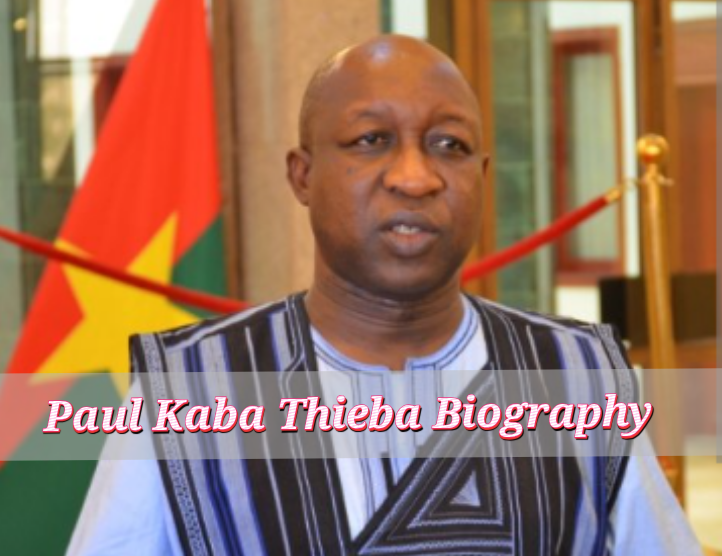
Paul Kaba Thieba Biography: Early Life, Age, Education, Appointments & Personal Life
Paul Kaba Thieba Biography
Paul Kaba Thieba is a respected Burkinabé economist and politician. He served as Prime Minister of Burkina Faso from January 6, 2016, to January 18, 2019. His story shows how a person with strong skills in finance and economics can rise to lead a country during a time of change. Burkina Faso, a landlocked nation in West Africa, faced many challenges after a popular uprising in 2014 and 2015. Thieba’s appointment brought hope for better economic management and stability. This article looks at his life, from his early years to his time in office and beyond. It aims to give clear facts in simple words so anyone can understand his contributions and path.
Paul Kaba Thieba Early Life and Education
Paul Kaba Thieba was born on July 28, 1960, in Bobo-Dioulasso. This is the second-largest city in Burkina Faso. At the time of his birth, the country was called Upper Volta. He grew up in a time when Burkina Faso was gaining independence and building its future.
Advertisements
Thieba completed his high school studies at Lycée Philippe Zinda Kaboré in Ouagadougou. He earned his BAC C series in June 1979. This qualification prepared him for university studies in business and economics.
He then studied at the University of Ouagadougou. In June 1982, he received a Bachelor of Business Administration (BBA). One year later, in 1983, he earned a Master of Business Administration (MBA). These degrees focused on business management and gave him a solid base in finance.
Later, Thieba continued his education in France. He obtained master’s degrees in finance and banking from universities there, including the University of Auvergne and the University of Bordeaux. Some sources also mention studies related to Paris Descartes University or Pierre Mendès-France University. His training in banking and finance helped him understand money systems in West Africa and beyond.
His education shaped him into an expert who could handle complex economic issues. Coming from a modest background in Bobo-Dioulasso, he used learning to open doors to important roles in regional institutions.
Paul Kaba Thieba Career
Before entering politics, Paul Kaba Thieba built a long career in banking and economics. He started working in the banking sector in France during the late 1980s. There, he managed portfolios and helped design funds.
Advertisements
In 1993, he joined the Central Bank of West African States (BCEAO). This bank serves eight countries in West Africa that use the CFA franc. Thieba worked his way up through important positions.
In September 1998, he became head of the foreign exchange service at BCEAO. He held this role until July 2000. Over the years, he took on more responsibilities. From 2012 to 2014, he served as advisor to the Director General of Operations.
His work at BCEAO focused on monetary policy, financial stability, and economic integration in the region. He gained deep knowledge of how money flows between countries and how to keep economies strong.
Thieba also worked with the West African Economic and Monetary Union. His experience made him a trusted expert in finance across West Africa. This background prepared him well for national leadership.
Paul Kaba Thieba Appointment as Prime Minister
In late 2015, Burkina Faso held elections after a period of political change. Roch Marc Christian Kaboré won the presidency and took office in December 2015. He needed a prime minister to lead the government.
On January 6, 2016, President Kaboré appointed Paul Kaba Thieba as Prime Minister. Thieba was 55 years old at the time. He was chosen because of his strong background in economics. The country needed someone who could focus on growth, jobs, and stability after years of unrest.
Thieba formed a government and started work right away. His team aimed to improve the economy and address poverty. As an independent politician with no strong ties to one party at first, he brought a fresh view.
During his time in office, he worked on programs to fight poverty and build infrastructure. He met with international leaders to strengthen ties. For example, he had discussions with UN Secretary-General Ban Ki-moon and Taiwanese President Tsai Ing-wen.
His leadership came at a difficult time. Burkina Faso faced growing security issues from militant groups. Despite these challenges, Thieba pushed for economic reforms.
On January 18, 2019, Thieba submitted his resignation. The entire cabinet resigned with him. President Kaboré announced it in a statement. No official reason was given at the time. However, the decision came amid rising attacks and public concerns about security. Christophe Joseph Marie Dabiré replaced him as Prime Minister soon after.
Paul Kaba Thieba Personal Life
Paul Kaba Thieba keeps his personal life private. He is Roman Catholic. He is married to Anne Thieba. In 2017, Anne Thieba was appointed as Burkina Faso’s ambassador for family planning by the Minister of Health. This role showed support for health and family issues in the country.
Thieba has three children. Little more is known about his family or daily life outside work. He focuses public attention on his professional duties rather than private matters.
Conclusion
Paul Kaba Thieba’s journey from a student in Bobo-Dioulasso to Prime Minister shows the power of education and hard work. His years at BCEAO gave him tools to handle big economic tasks. As Prime Minister, he tried to bring positive change to Burkina Faso during a key moment in its history.
Though his time in office ended with resignation amid security problems, his focus on finance and development left a mark. Today, he continues to contribute in other roles, such as leading the National Deposits and Consignments Office and serving on boards.
Thieba’s story reminds us that leaders with technical skills can help nations grow. Burkina Faso keeps moving forward, and figures like him play a part in that progress. Learning about people like Paul Kaba Thieba helps us understand West African politics and economics better.
FAQs
Who is Paul Kaba Thieba?
Paul Kaba Thieba is a Burkinabé economist and politician. He was born on July 28, 1960, in Bobo-Dioulasso. He served as Prime Minister of Burkina Faso from January 6, 2016, to January 18, 2019. Before that, he worked for many years at the Central Bank of West African States.
What is Paul Kaba Thieba’s background?
Thieba grew up in Burkina Faso when it was called Upper Volta. He studied business and finance at the University of Ouagadougou and in France. His career started in banking, and he became an expert in regional economics.
When was Paul Kaba Thieba Prime Minister?
He served as Prime Minister from January 6, 2016, until January 18, 2019. President Roch Marc Christian Kaboré appointed him shortly after taking office.
Why did Paul Kaba Thieba resign?
Thieba and his cabinet resigned on January 18, 2019. The official statement gave no specific reason. This happened during a period of increasing militant attacks and security concerns in Burkina Faso.
What were Paul Kaba Thieba’s major achievements?
As Prime Minister, he worked on economic reforms and poverty reduction efforts. He used his banking experience to support financial stability. He also built international relations to help Burkina Faso.
Is Paul Kaba Thieba still involved in public life?
After leaving office, Thieba took on roles such as head of the National Deposits and Consignments Office in Burkina Faso. He has also served on the board of Development Media International.
How did his economic background shape his policies?
Thieba’s long career in central banking helped him focus on sound financial management. He aimed to improve economic growth and reduce poverty through practical steps based on his expertise.