Hendrik Witbooi Jr. Biography: Early Life, Education, Age & Career
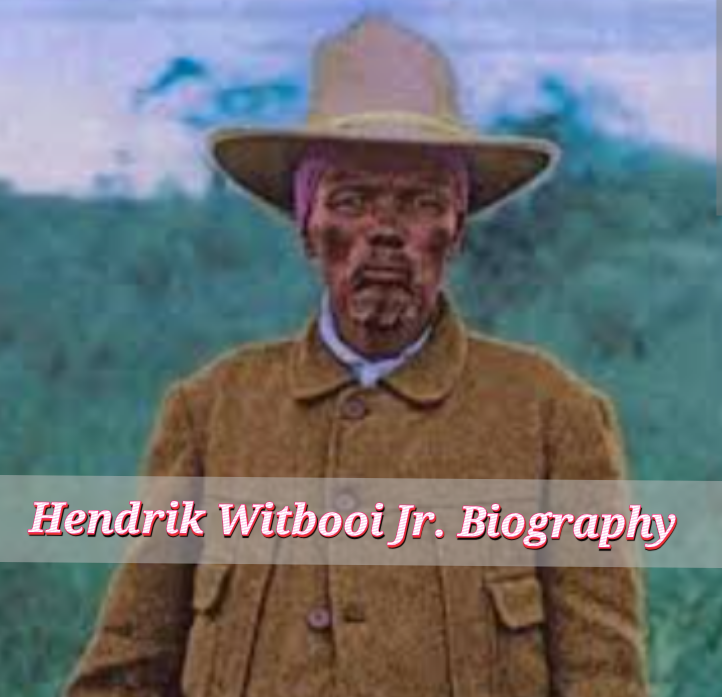
Hendrik Witbooi Jr. Biography
Hendrik Witbooi Jr. stands out as an important figure in Namibia’s history. He worked hard to help his country gain freedom from outside control. Born in a time when Namibia faced tough rules from South Africa, he grew into a leader who mixed old traditions with new politics. As a chief of his clan, a church pastor, and a top government official, he showed how one person can bridge the past and the future. His life story teaches us about standing up for justice and working together for change.
Many people search for “who is Hendrik Witbooi Jr.” because he comes from a famous family. His greatgrandfather was the wellknown Hendrik Witbooi, a hero who fought against German rule in the early 1900s. Hendrik Witbooi Jr. carried on that spirit of resistance. He joined the fight for Namibia’s independence and later helped build the new nation. From teaching kids to leading in government, his path offers lessons on leadership and service.
Advertisements
This article looks at his life in simple terms. We will cover where he came from, what he learned, how he worked, his home life, and what he left behind. By the end, you will see why he matters to Namibia and beyond. His story reminds us that real change comes from people who care deeply about their community.
Namibia gained independence on March 21, 1990, after years of struggle. Hendrik Witbooi Jr. played a key role in that. He helped write the country’s rules and set up fair ways for workers. As a freedom fighter, he faced jail time but never gave up. His work in the South West Africa People’s Organization, or SWAPO, brought different groups together. This unity was vital for winning freedom.
Today, people remember him as a bridge between Namibia’s tribal roots and its modern government. He showed that leaders can honor old ways while pushing for progress. If you want to know more about African heroes, his life is a great place to start. It shows how family history can shape a person’s choices and impact a whole nation.
Hendrik Witbooi Jr. Early Life and Education
Hendrik Witbooi Jr. was born on January 7, 1934, in the small town of Gibeon, located in Namibia’s Hardap Region. This area, known for its dry lands and strong communities, shaped his early years. He grew up in a family that valued faith and service. His father, Pastor Markus Witbooi, led a church, and his mother, Hatais Witbooi, helped raise him in a home full of care and teachings from the Bible. As part of a pastoral family, he learned about helping others from a young age.
His family ties went back to a famous leader. He was the greatgrandson of Hendrik Witbooi, the Nama chief who stood against German forces in the late 1800s and early 1900s. That ancestor died in 1905 after fighting for his people’s rights. Growing up, Hendrik Witbooi Jr. heard stories of bravery and resistance. These tales likely inspired him to think about fairness and freedom even as a child.
Advertisements
Education played a big part in his young life. He went to schools run by missionaries, which were common in Namibia back then. First, he attended the Rhenish Missionary School, where he learned basic skills like reading and writing. Then, he studied at the Wesleyan Methodist School, also in Namibia. These places taught him not just facts, but also values like kindness and hard work. Later, he crossed the border to South Africa for more learning at the Wilberforce Institute in Evaton. This school focused on giving African students a good education during a time of unfair rules.
At Wilberforce, he built on what he knew from home. The institute helped him grow his mind and prepare for future roles. By the time he finished, he had skills that would help him teach others. His time in South Africa also opened his eyes to the problems of apartheid, the system that kept people apart based on skin color. This experience made him see how Namibia faced similar issues under South African control.
Back in Namibia, he used his education right away. In 1956, at age 22, he started working as a teacher. This job let him share knowledge with kids in his community. He taught in Keetmanshoop first, then moved to Maltahöhe in 1959. By 1965, he returned to Gibeon to help his aging father and the local church. His early work showed his love for learning and helping others grow.
These years built a strong base for his later life. From a boy in Gibeon to a student in South Africa, he gained tools to lead. His family and schools taught him to value community, faith, and justice. These lessons would guide him through tough times ahead.
Hendrik Witbooi Jr. Career
Hendrik Witbooi Jr. built a long career focused on teaching, church work, and politics. He started as a teacher in 1956, working at a government school in Keetmanshoop. Three years later, in 1959, he moved to Maltahöhe to continue teaching. In 1965, he went back to Gibeon at the request of his community and church. There, he supported his father and took on more roles.
Beyond classrooms, he helped his clan’s leader. From 1958, he served as secretary to Kaptein Hendrik Samuel Witbooi, his predecessor. He gave advice on political matters and handled church records. This work made him trusted in his community. He also led in the African Methodist Episcopal Church, teaching Sunday school and directing the choir at St Mark’s AME Church.
His path changed in the 1970s as he joined the fight for Namibia’s freedom. In March 1973, he sent a message to the United Nations leader asking for help to end South Africa’s control over Namibia. This act showed his growing stand against unfair rule.
In 1976, at age 42, he joined SWAPO, the group leading the push for independence. He saw that people needed to unite across differences to win rights and justice. That same year, he faced arrest for not accepting a job transfer during a teachers’ strike. He spent time in jail as a political prisoner from 1976 to 1977.
Even in hard times, his leadership grew. While in solitary confinement in 1977, his clan elected him as the seventh Kaptein of the ǀKhowesin. This role made him a traditional chief, linking him to his greatgrandfather’s legacy. He brought several Nama groups into SWAPO, strengthening the movement.
In 1978, while still detained, SWAPO picked him as Secretary for Education and Culture on their main team. He joined talks with the United Nations about Namibia’s freedom from 1978 to 1989. His work helped plan the path to independence.
By 1983, he became Acting VicePresident of SWAPO. The next year, in 1984, he won the full VicePresident role. He held this until 2005, showing his steady place in the party.
After independence in 1990, he helped shape the new country. In 1989, he joined the group that wrote Namibia’s Constitution. On March 21, 1990, he became the first Minister of Labour and Manpower Development. He worked on rules to protect workers and build the economy until 1995.
In 1995, he moved up to Deputy Prime Minister, serving until 2005 under President Sam Nujoma. He also sat in the National Assembly from 1990 to 2005. In June 1997, SWAPO reelected him as VicePresident.
Even after politics, his early teaching spirit continued. In March 1979, he started a private school with community help. Classes happened in church buildings and under trees. This effort gave education to kids during tough times.
As a pastor, he led in the African Methodist Episcopal Church. He earned honorary degrees from schools in the United States in 1990, honoring his work in education and faith.
His career mixed teaching, faith, tradition, and politics. He faced jail and challenges but always aimed for a better Namibia. His roles showed how one person can serve in many ways to help their people.
Hendrik Witbooi Jr. Personal Life
Hendrik Witbooi Jr. lived a life rooted in family, faith, and community. He grew up in Gibeon with his parents, Pastor Markus and Hatais Witbooi. Their home focused on church and helping others, which shaped his values.
As an adult, he lived in Windhoek, the capital, in the Khomas Region. This move came with his growing roles in politics and church. He stayed connected to his roots as the seventh Kaptein of the ǀKhowesin clan, a title he got in 1977.
Faith was central to his life. He served as a pastor and leader in the African Methodist Episcopal Church. He taught Sunday school and led the choir, showing his love for music and teaching. His work as Presiding Elder helped guide the church in Namibia.
He married and built a family, though details stay private. His life balanced public duties with home. As a traditional chief, he honored Nama customs while living in a modern city.
In his free time, he likely enjoyed simple things like family talks or church events. His greatgrandfather’s legacy influenced him, but he made his own path. He faced health issues later, including cancer, but stayed strong until the end.
His personal choices showed commitment to service. From teacher to leader, he put others first. This quiet strength made him respected by many.
Conclusion
Hendrik Witbooi Jr. left a strong mark on Namibia. From his birth in 1934 to his death in 2009, he worked for freedom and fairness. As a teacher, pastor, chief, and politician, he touched many lives. His join to SWAPO in 1976 and roles in government helped build a free nation.
He bridged old traditions with new ideas, bringing Nama groups into the independence fight. His time as Minister and Deputy Prime Minister set examples for leaders today. Namibia honors him as a hero who fought with words and actions.
His story teaches us to stand for justice, even in hard times. Future generations can learn from his life of service. Hendrik Witbooi Jr. shows that one person’s efforts can change a country.
FAQs
Where was Hendrik Witbooi Jr. born?
Hendrik Witbooi Jr. was born on January 7, 1934, in Gibeon, which is in the Hardap Region of Namibia. This small town played a big role in his early life, surrounded by family and community.
What did Hendrik Witbooi Jr. do?
He worked as a teacher, pastor, traditional chief, and politician. He joined SWAPO in 1976, served as VicePresident, and held government posts like Minister of Labour from 1990 to 1995 and Deputy Prime Minister from 1995 to 2005. He fought for Namibia’s independence and helped write its Constitution.
Who was Hendrik Witbooi Jr.’s family?
He was raised by Pastor Markus Witbooi and Hatais Witbooi. He was the greatgrandson of the famous Nama chief Hendrik Witbooi (1830–1905). He succeeded Hendrik Samuel Witbooi as Kaptein in 1977. Details on his own marriage and children remain private, but he lived in Windhoek.
Why is Hendrik Witbooi Jr. important?
He played a key role in Namibia’s independence struggle and postfreedom government. As a freedom fighter, he faced imprisonment but united people. His work in labor rights and politics helped shape modern Namibia. He is seen as a national hero for his leadership and legacy.
What challenges did Hendrik Witbooi Jr. face?
He dealt with arrests during the independence war, including time in solitary confinement from 1976 to 1977. He balanced traditional chief duties with national politics in a new country. Later, he battled cancer, which led to his death on October 13, 2009.
What is Hendrik Witbooi Jr.’s legacy?
His legacy includes uniting Nama clans in SWAPO, helping draft the Constitution, and promoting worker rights. He is remembered as a bridge between Namibia’s past and present. His life inspires leaders to serve with faith and courage.