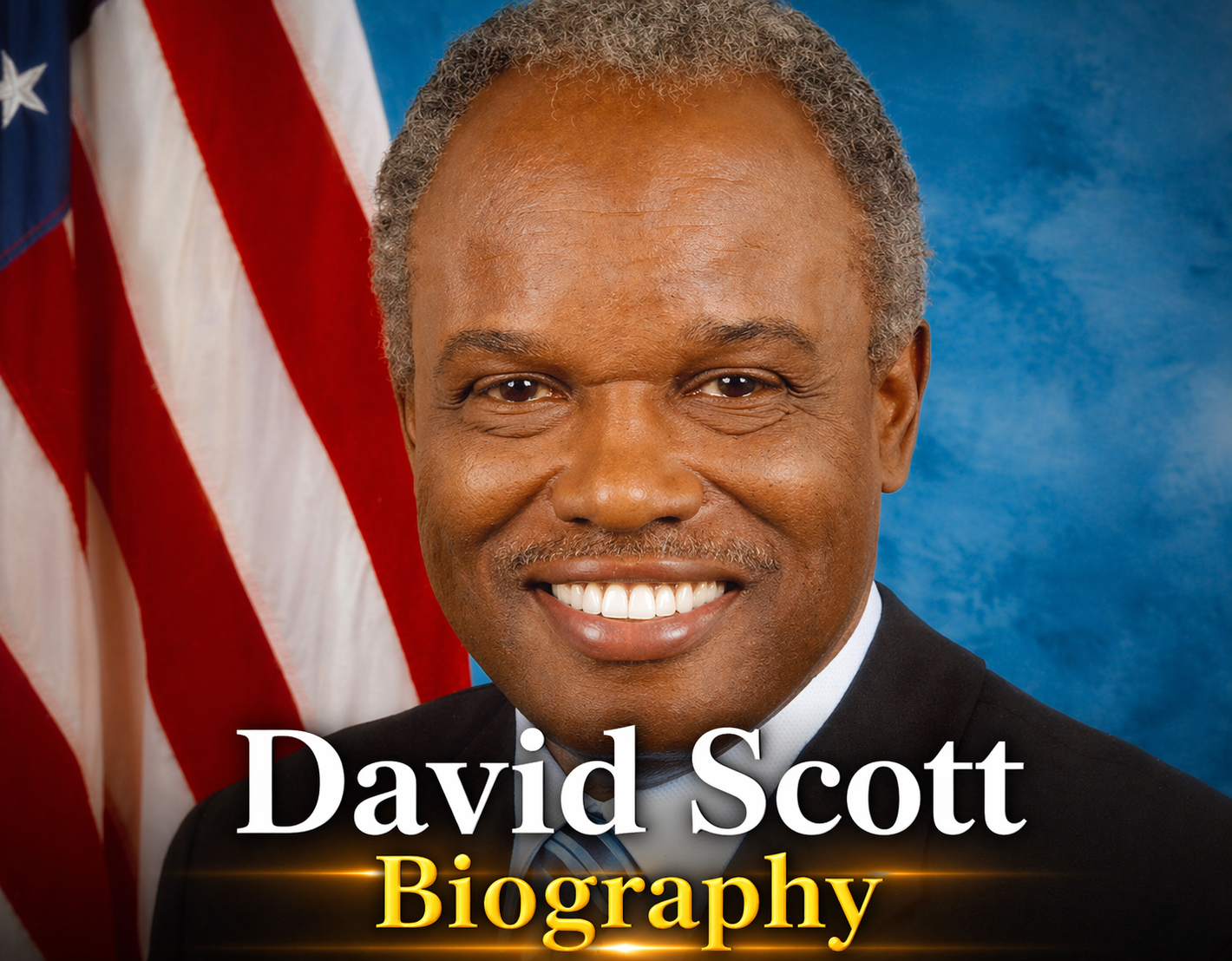
David Scott Biography: Age, Early Life, Career, Net Worth, Family, Death & Legacy
Who Is David Scott?
David Scott was an American politician who served as a longtime member of the United States House of Representatives, representing Georgia’s 13th congressional district from 2003 until his death in 2026. A member of the Democratic Party, he was widely known for his work on agricultural policy, economic development, and support for underserved communities.
Advertisements
Over the course of his career, he became a significant figure in U.S. politics, notably making history as the first Black chairman of the House Agriculture Committee, where he played a key role in shaping policies related to farming, food security, and rural development. His legislative work reflected a commitment to improving opportunities for working families and strengthening support systems for vulnerable populations.
As of April 22, 2026, he is trending globally following confirmed reports of his death at the age of 80. His passing marks the end of a decades-long career in public service, during which he built a reputation as a dedicated lawmaker and advocate for his constituents.
David Scott Early Life and Background
David Scott was born on June 27, 1945, in Aynor, South Carolina, where he spent his early childhood before his family later relocated to Atlanta, Georgia. Growing up in the American South during a time of racial segregation, his early life was shaped by the social and political realities of the era, which influenced his later commitment to public service and civil rights.
He was raised in a family that valued education, discipline, and hard work, which played a key role in shaping his character and ambitions. His upbringing in Atlanta exposed him to a growing center of African American culture and political activism, further strengthening his interest in leadership and community development.
From a young age, he showed a strong interest in public affairs and communication, developing skills that would later support his career in politics. His early experiences in the South, particularly during the civil rights movement period, contributed to his understanding of inequality and the importance of representation in government.
Advertisements
Overall, David Scott’s early life reflects a foundation built on resilience, education, and a deep awareness of social issues, which would later guide his path into politics and public service.
David Scott Education
David Scott pursued his education in the United States, building a strong academic foundation that supported his later career in public service and politics. He attended Florida A&M University, one of the nation’s prominent historically Black universities, where he earned a degree in finance.
During his time at the university, he developed a solid understanding of economics, business, and financial systems, which later influenced his work in economic policy and legislative decision-making. His education equipped him with analytical and leadership skills that proved valuable throughout his career in both the private sector and government.
Overall, his academic background in finance played an important role in shaping his perspective on economic development, fiscal responsibility, and policies aimed at supporting working families and communities.
David Scott Career
David Scott built a long and influential career in American politics, marked by decades of service at both the state and federal levels. He began his political journey in the 1970s, first serving in the Georgia House of Representatives before moving on to the Georgia State Senate, where he gained recognition for his work on economic and community development issues.
In 2002, he was elected to the United States House of Representatives, representing Georgia’s 13th congressional district. He assumed office in 2003 and went on to serve multiple terms, becoming one of the most experienced lawmakers from his state. During his time in Congress, he focused on policies related to agriculture, financial services, and support for working families.
A major highlight of his career came when he became the first Black chairman of the House Agriculture Committee, a historic achievement that placed him at the center of national discussions on farming, food security, and rural development. In this role, he worked on legislation aimed at supporting farmers, improving food access, and strengthening agricultural programs across the United States.
Throughout his career, he was known as a moderate Democrat, often working across party lines to advance legislation. He advocated for economic growth, healthcare access, and educational opportunities, particularly for underserved communities. His approach to governance emphasized cooperation, stability, and long-term policy impact.
In the later years of his career, he continued to serve in Congress while dealing with health challenges that affected his public appearances. Despite this, he remained committed to his duties and continued to represent his constituents until his death in April 2026.
Overall, David Scott’s career reflects a lifetime of public service, legislative achievement, and dedication to improving the lives of his constituents and communities across the United States.
David Scott Personal Life
David Scott maintained a stable and grounded personal life alongside his long career in public service. He was married to Alfredia Scott, and their marriage was often described as supportive and enduring, providing a strong foundation throughout his years in politics. He was also a father and grandfather, and family remained an important part of his life even while serving in Congress for decades.
He was known to be a family-oriented individual who valued close relationships and balance between his professional responsibilities and personal life. Despite the demands of serving in Congress, he remained committed to his family and community, often emphasizing the importance of unity, faith, and responsibility.
In terms of lifestyle, he was regarded as disciplined and focused, reflecting the seriousness of his role as a public servant. He kept much of his private life away from public scrutiny, choosing instead to let his work and contributions define his public image.
Social Media Presence
David Scott had a limited but official presence on social media, primarily used for political communication, public updates, and engagement with constituents rather than personal content.
Instagram: @repdavidscott
Through this platform, he shared updates about legislative work, community programs, and public service activities, maintaining communication with the people he represented.
David Scott Death and Tributes
David Scott passed away on April 22, 2026, at the age of 80, bringing an end to more than five decades of public service in American politics. His death was confirmed by congressional leaders, and while the exact cause was not immediately disclosed, it followed a period of declining health that had affected his public appearances and legislative activity in recent years.
News of his passing quickly spread across the United States and beyond, prompting an outpouring of tributes from political leaders, colleagues, and members of the public. Lawmakers from both the Democratic and Republican parties praised his dedication, describing him as a committed public servant who worked tirelessly for his constituents and the nation.
Many tributes highlighted his historic role as the first Black chairman of the House Agriculture Committee, noting how his leadership helped shape important policies on agriculture, food security, and rural development. Others remembered his efforts to support underserved communities, including his advocacy for small businesses, farmers, and historically Black colleges and universities.
Fellow members of Congress also reflected on his character, emphasizing his willingness to work across party lines and his calm, respectful approach to governance. He was often described as a bridge-builder who valued cooperation and practical solutions over political division.
Outside of government, community leaders and constituents expressed gratitude for his years of service, recalling his accessibility and commitment to addressing local concerns. His impact was felt not only through legislation but also through his direct engagement with the people he represented.
Overall, the tributes that followed his death reflect a legacy of service, leadership, and lasting influence, with many honoring him as a dedicated lawmaker whose contributions will continue to shape American policy and public life.
David Scott Age, Religion, Tribe, Height & Physical Appearance
David Scott had a public image that reflected experience, dignity, and a long career in leadership.
He was born on June 27, 1945, and was 80 years old at the time of his death on April 22, 2026. His age represented decades of public service and political involvement at both state and national levels.
In terms of religion, he was known to be a Christian, and his faith played a role in shaping his values, public service, and personal outlook. He often spoke about principles such as integrity, community, and responsibility, which were aligned with his beliefs.
Regarding ethnicity or tribe, he was an African American, and his identity was closely connected to the historical and social experiences of Black communities in the United States. This background influenced his advocacy for civil rights, equality, and opportunities for underserved populations.
Physically, he was generally described as being of average height with a solid build, maintaining a formal and professional appearance throughout his career. He was often seen in business attire, reflecting his role as a senior lawmaker.
He was also recognized for his calm demeanor, authoritative presence, and composed communication style, qualities that contributed to his reputation as a respected and experienced public figure.
David Scott Net Worth
David Scott did not have a publicly confirmed exact net worth, as U.S. lawmakers are only required to disclose financial ranges rather than precise figures.
Based on available financial disclosures and estimates, his net worth was generally considered to be modest compared to many members of Congress, and likely fell within the low-to-mid million-dollar range during his years in office. However, no widely agreed or officially verified figure has been published.
His financial standing was primarily built from his long career in public service, earnings from his earlier advertising business in Atlanta before entering politics, and standard congressional salary and benefits.
Unlike some U.S. politicians who have large business empires or investment portfolios, he was not known for extreme wealth or major corporate holdings. His profile was more aligned with a career public servant rather than a high-net-worth political figure.
Overall, David Scott’s net worth is best described as undisclosed but moderate, reflecting decades of public service and private business experience rather than large-scale personal wealth.
David Scott Legacy
David Scott left behind a legacy defined by decades of public service, legislative impact, and advocacy for underserved communities. Over the course of his career, he became a respected figure in American politics, known for his commitment to economic development, agriculture, and policies that supported working families.
He is particularly remembered for making history as the first Black chairman of the House Agriculture Committee, where he played a key role in shaping national discussions on food security, farming support, and rural development. His leadership in this position marked a significant milestone in representation and influence within U.S. governance.
Throughout his time in office, he consistently worked to improve opportunities for marginalized communities, including support for historically Black colleges and universities (HBCUs), small businesses, and low-income families. His ability to work across party lines also earned him recognition as a pragmatic and cooperative lawmaker.
Despite facing health challenges later in life, he remained dedicated to his responsibilities, continuing to serve his constituents until his passing in 2026. His long tenure in Congress reflects a career built on persistence, experience, and a deep sense of duty.
Overall, David Scott’s legacy is one of service, representation, and lasting impact, leaving behind a record of leadership that influenced both his district and national policy.
Conclusion
David Scott’s life and career reflect a remarkable journey of dedication, resilience, and service to the American people, spanning more than five decades in public life. From his early beginnings in Georgia politics to his historic role in Congress, he consistently worked to advance policies that supported economic growth, agriculture, and underserved communities. His passing in 2026 marked the end of a significant era in U.S. politics, but his contributions and influence continue to shape the legacy he leaves behind as a committed and impactful public servant.
FAQ About David Scott
1. Who was David Scott?
David Scott was an American politician who served as a U.S. Representative for Georgia’s 13th congressional district from 2003 until his death in 2026.
2. When was David Scott born?
He was born on June 27, 1945.
3. How old was David Scott?
He was 80 years old at the time of his death on April 22, 2026.
4. Is David Scott dead?
Yes, he passed away on April 22, 2026, at the age of 80.
5. What was David Scott known for?
He was known for his long service in Congress and for becoming the first Black chairman of the House Agriculture Committee.
6. What political party did David Scott belong to?
He was a member of the Democratic Party.
7. Where did David Scott study?
He studied finance at Florida A&M University.
8. Was David Scott married?
Yes, he was married to Alfredia Scott.
9. Did David Scott have children?
Yes, he had children and grandchildren.
10. What religion did David Scott follow?
He was a Christian.
Read more: