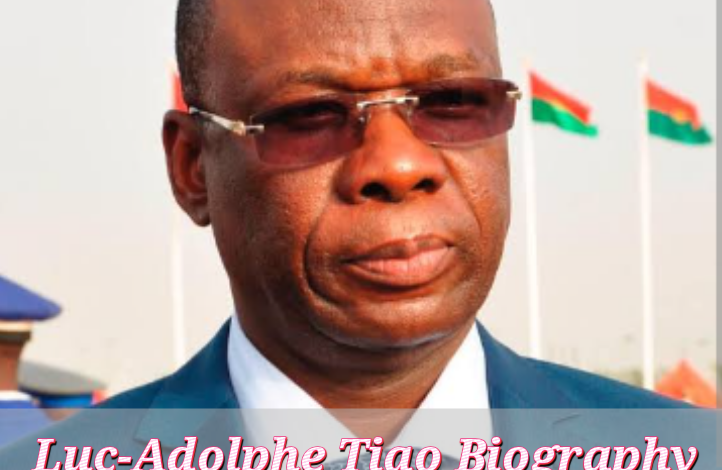
Luc-Adolphe Tiao Biography
Luc-Adolphe Tiao is a well-known figure from Burkina Faso. He worked as a politician, journalist, and diplomat. Many people remember him as the Prime Minister of Burkina Faso from 2011 to 2014. His time in office came during a period of big changes in the country. Burkina Faso, once called Upper Volta, is a nation in West Africa. It has faced many challenges like protests and shifts in leadership.
He grew up in a time when the country was moving from colonial rule to independence. Upper Volta became independent from France in 1960. Tiao’s life shows how someone can start in one field and move to others. He began with thoughts of becoming a priest, then turned to journalism, and later entered politics.
As Prime Minister, Tiao served under President Blaise Compaore, who ruled for 27 years. Tiao took office on April 18, 2011, after replacing Tertius Zongo. This happened during unrest in the country, including protests and military issues. His role was to help stabilize the government. He focused on areas like economic ties with other countries and regional groups.
Tiao’s story is important for understanding Burkina Faso’s recent history. The country has seen uprisings, like the one in 2014 that ended Compaore’s rule. Tiao resigned on October 30, 2014, amid those events. After that, he faced legal troubles but later returned to a quieter life. This article will cover his early years, education, work path, successes, problems, personal details, and more. It aims to teach readers about his role in a simple way. By looking at his life, we can learn about leadership in Africa and how events shape a nation.
Burkina Faso is landlocked and relies on farming and mining. Leaders like Tiao worked on improving trade and security. His background in media helped him communicate with people. Today, as of 2026, Burkina Faso still deals with issues like instability in the Sahel region. Tiao’s time in power offers lessons on governance during tough times.
Luc-Adolphe Tiao Early Life and Education
Luc-Adolphe Tiao was born on June 4, 1954, in Tenkodogo. This place was in Upper Volta, a French colony that later became Burkina Faso. Growing up there, he saw the end of colonial rule. The country gained freedom in 1960, when Tiao was just six years old. Life in Tenkodogo was simple, with many people working in agriculture.
From a young age, Tiao showed interest in learning. Between 1969 and 1974, he went to a seminary. A seminary is a school for training priests. He wanted to join the church. But he changed his mind. He felt his ideas, which leaned toward left-wing views, did not fit with church life. Left-wing means supporting more equality and changes for the poor.
After leaving the seminary, Tiao focused on studies in communication. He went to the University of Dakar in Senegal. There, he studied at the Center for Science and Information Technology Studies. He graduated in 1980 with a degree in journalism. Journalism is about reporting news. He also studied at the University of Ouagadougou in Burkina Faso. This school is the main university in the capital.
These schools helped Tiao build skills in writing and sharing information. In Africa, education often mixes local culture with outside influences. Tiao’s time in Dakar exposed him to ideas from other countries. Senegal was a hub for learning in West Africa.
His early choices show a shift from religion to media. This change was common in post-colonial Africa, where young people sought new ways to help their nations. Tiao’s background prepared him for roles in government later. He learned to think critically and express ideas clearly.
Family life in his early years is not widely detailed in records. But growing up in a rural area like Tenkodogo likely taught him about community needs. Burkina Faso has many ethnic groups, and Tenkodogo is in a region with Mossi people, the largest group.
Education was key for Tiao. It opened doors beyond his hometown. Many leaders in Africa start with strong schooling. His path from seminary to university highlights adaptability. This trait helped him in his future jobs.
Luc-Adolphe Tiao Career
Luc-Adolphe Tiao’s work life started in journalism. After graduating, he built a name for fair reporting. He edited a paper called Carrefour Africain. From 1987 to 1990, he led Editions Sidwaya, a major publisher in Burkina Faso.
In 1988, he helped start the Journalists Association of Burkina Faso. He chaired it until 1990. This group supported press freedom. Press freedom means journalists can report without fear.
Tiao moved to government work in August 1990. He became Secretary-General of the Ministry of Communication. He held this until August 1992. Then, from November 1992 to August 1996, he was press attache at Burkina Faso’s embassy in France. A press attache handles media for the embassy.
Back home, from 1997, he managed communication for the Prime Minister’s office. In May 2001, he became President of the Higher Council for Information. He stayed until May 2008. This council oversees media rules.
On May 2, 2008, Tiao was named Ambassador to France. He also represented Burkina Faso at the Holy See in 2009. As ambassador, he worked on ties between countries.
His big role came on April 18, 2011. President Compaore picked him as Prime Minister. This was after protests in 2011. Tiao replaced Tertius Zongo to calm things.
As Prime Minister, Tiao led the government. He handled daily affairs under the President. In December 2012, he resigned but was reappointed days later.
He belonged to the Congress for Democracy and Progress party. This party supported Compaore.
Tiao’s career mixed media, diplomacy, and politics. He used his skills to bridge gaps. For example, as ambassador, he strengthened France-Burkina relations. In government, he focused on communication strategies.
His time as Prime Minister ended on October 30, 2014. Protests forced the government to dissolve.
After that, Tiao went to Ivory Coast in exile. He returned in September 2016 and faced arrest.
Now, he works as a consultant at Latcom Communications Inc. He also does farming and livestock.
Tiao spoke at events like a UPF-Africa webinar in June 2020. He shares views on peace.
His path shows how experience in one area leads to others. From reporter to leader, he adapted to needs.
Luc-Adolphe Tiao Achievements
Luc-Adolphe Tiao made marks in several fields. In journalism, he pushed for better media. As chair of the Journalists Association from 1988 to 1990, he helped build a strong group for reporters.
As head of the Higher Council for Information from 2001 to 2008, he shaped media policies. This improved information flow in Burkina Faso.
In diplomacy, as Ambassador to France starting May 2008, he boosted ties. France is a key partner for aid and trade.
He also served the Holy See in 2009, linking Burkina Faso to the Vatican.
As Prime Minister from 2011 to 2014, Tiao worked on economic integration. In an interview, he talked about the ECOWAS common external tariff finalized on October 25, 2013. This tariff helps trade in West Africa.
He aimed to increase regional trade and competitiveness. ECOWAS is a group of West African countries.
During unrest, Tiao tried to stabilize the government. His reappointment in December 2012 showed trust from the President.
Tiao contributed to Burkina Faso’s role in regional mediation. Under Compaore, the country helped in conflicts.
His work in communication helped government messaging. This was useful during crises.
After office, Tiao spoke on peace, like in 2020. He shares knowledge from his experience.
Overall, his achievements focus on media freedom, diplomacy, and economic ties. These helped Burkina Faso connect better with the world.
Luc-Adolphe Tiao Controversies
Luc-Adolphe Tiao faced issues during his time as Prime Minister. The main one was the 2014 uprising in Burkina Faso. This started in October 2014. People protested against changes to the constitution. President Compaore wanted to run again after 27 years.
Protests spread to cities like Ouagadougou. On October 30, 2014, crowds burned buildings, including the National Assembly.
Tiao’s government dissolved that day. He resigned amid the chaos.
After the uprising, Tiao went to Ivory Coast. He returned on September 16, 2016, and was arrested. Charges included murder linked to the protests.
Authorities said he signed a order for the army to use force. At least six people died on October 30, 2014.
Tiao was jailed in Ouagadougou. This was part of trials for Compaore’s last government.
The uprising led to Compaore fleeing to Ivory Coast.
In 2013, students stoned Tiao during a university visit. This showed unrest before 2014.
These events highlight challenges in governance. Protests came from youth and civil groups wanting change.
Tiao’s role in the response drew criticism. But records show he was part of the system under Compaore.
Legal cases aimed for justice after the uprising. Tiao’s arrest was a step in that.
Luc-Adolphe Tiao Personal Life
Luc-Adolphe Tiao is married to Christiane Tiao, born Agbo. They wed on December 29, 1984. They have four children, including a daughter.
After politics, Tiao focuses on farming and livestock. He lives in Burkina Faso.
He works as a consultant in communication.
Tiao keeps a low profile now. He uses platforms like LinkedIn and Facebook.
His family life stays private. No major details on hobbies beyond work.
Conclusion
Luc-Adolphe Tiao’s life covers journalism, diplomacy, and leadership. Born in 1954, he rose to Prime Minister in 2011. His time ended with the 2014 events. He achieved in media and economic ties but faced controversies over protests.
Today, he consults and farms. His story teaches about change in Africa. Burkina Faso continues to evolve, and Tiao’s role is part of that history.
FAQs
When was Luc-Adolphe Tiao born?
He was born on June 4, 1954, in Tenkodogo, Upper Volta, now Burkina Faso.
What did Luc-Adolphe Tiao study?
He studied to be a priest at a seminary from 1969 to 1974. Later, he got degrees in journalism from the University of Dakar in 1980 and the University of Ouagadougou.
What were Luc-Adolphe Tiao’s main jobs?
He worked as a journalist, edited papers, served as ambassador to France from 2008, and was Prime Minister from 2011 to 2014.
What achievements did Luc-Adolphe Tiao have?
He helped with ECOWAS tariff in 2013 for better trade. He also advanced media freedom as council president from 2001 to 2008.
What controversies involved Luc-Adolphe Tiao?
He was charged with murder in 2016 for his role in the 2014 protests where force was used.
What is Luc-Adolphe Tiao doing now?
As of 2026, he consults at Latcom Communications and does farming.
Who is Luc-Adolphe Tiao’s family?
He married Christiane Agbo on December 29, 1984, and they have four children.
How did Luc-Adolphe Tiao contribute to Burkina Faso’s economy?
He supported the ECOWAS common external tariff in 2013 to boost integration and trade.