David Njuguna Kiaraho Biography: Early Life, Age, Education, Latest & Personal Life

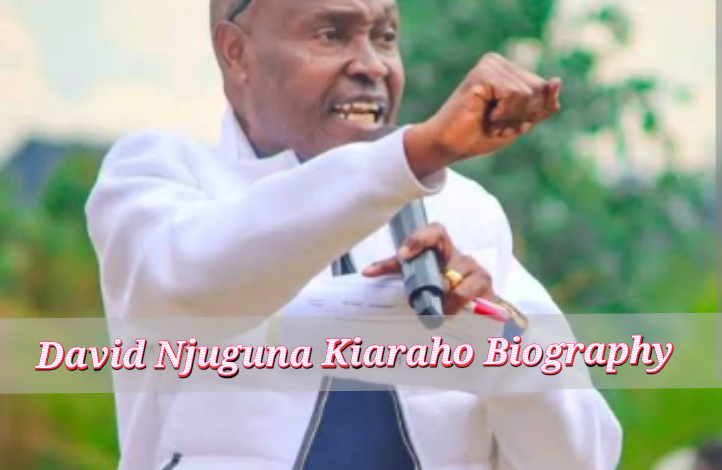
David Njuguna Kiaraho Biography
David Njuguna Kiaraho, born in Ol Kalou, Nyandarua County, Kenya, was a distinguished Kenyan architect and politician who served as the Member of Parliament for Ol Kalou Constituency for three consecutive terms from 2013 until his passing in 2026. A man of quiet determination and deep commitment to public service, he transitioned seamlessly from a successful career in shaping Kenya’s physical infrastructure to representing the interests of his constituents in the National Assembly. Throughout his life, Kiaraho embodied the values of hard work, integrity, and community focus, earning respect across party lines for his measured approach to governance and his expertise in matters of transport, public works, and housing. His legacy reflects a life dedicated to building not only structures but also stronger communities in one of Kenya’s key agricultural regions.
Kiaraho’s journey offers a compelling example of how professional expertise can inform effective leadership in public office. As a principal architect with decades of experience, he brought practical knowledge to parliamentary debates on infrastructure development, contributing to policies that aimed to improve roads, housing, and urban planning across the nation. Even as he faced health challenges in his final years, he remained focused on service, delegating duties where necessary while upholding his reputation as a humble and visionary leader. His story resonates with many Kenyans who value leaders who prioritize results over rhetoric, and his contributions continue to inspire discussions on the role of professionals in politics.
David Njuguna Kiaraho Early Life
David Njuguna Kiaraho was born on October 2, 1963, in Ol Kalou, Nyandarua County, Kenya. He entered the world during a pivotal moment in the nation’s history, just months after Kenya gained independence from British colonial rule in December 1963. Ol Kalou, situated in the fertile Central Highlands, was a rural area known for its agricultural potential, particularly in potato farming, dairy production, and other crops that sustained local families. Growing up in this environment instilled in young David a strong appreciation for community cooperation, resilience, and the importance of sustainable development. The region’s diverse topography, ranging from cold highlands to warmer lowlands, presented both opportunities and challenges, such as limited access to modern infrastructure, education, and healthcare, which later shaped his priorities as a public servant.
As a child in post-independence Kenya, Kiaraho witnessed the early efforts of nation-building under the new government. Families in Ol Kalou often relied on farming and small-scale enterprises, fostering values of hard work and self-reliance. Though specific details about his immediate family background remain private, it is clear that his upbringing emphasized education as a pathway to progress. These formative years in a predominantly Kikuyu community exposed him to the realities of rural life, including the need for better roads, schools, and economic opportunities. Such experiences laid the foundation for his lifelong dedication to improving the lives of ordinary Kenyans, particularly those in agricultural constituencies like his own. By the time he reached school age, Kiaraho was already demonstrating the focus and discipline that would define his academic and professional path.
David Njuguna Kiaraho Education
Kiaraho’s educational journey began at Munyeki Primary School between 1971 and 1973, where he received his initial formal schooling in a local setting typical of rural Kenya at the time. He then transferred to Park Road Primary School, completing his primary education and earning the Certificate of Primary Education in 1977. This achievement opened doors to some of Kenya’s most prestigious secondary institutions, reflecting his academic promise during an era when access to quality education was highly competitive and seen as a key to social mobility.
From 1978 to 1981, he attended Alliance High School for his O-Level studies. Alliance High, one of Kenya’s oldest and most respected boys’ schools, was renowned for producing leaders in various fields, and Kiaraho thrived in its rigorous academic environment. The school emphasized not only scholastic excellence but also character development, leadership, and a sense of national responsibility. Following his O-Levels, he proceeded to Nairobi School for A-Level studies between 1982 and 1983. Nairobi School, another elite institution, further honed his analytical skills and prepared him for higher education in a demanding program.
In 1985, Kiaraho enrolled at the University of Nairobi, where he pursued a Bachelor of Architecture degree. His studies spanned until 1992 or 1993, a period that coincided with significant changes in Kenya, including economic reforms and growing urbanization. The architecture program at the University of Nairobi equipped him with technical expertise in design, planning, and construction management, skills that would prove invaluable in both his professional practice and later political contributions. During these university years, he developed a deep understanding of how built environments influence daily life, particularly in developing nations facing infrastructure gaps. Graduating with this qualification marked the beginning of a career rooted in practical problem-solving, and it positioned him well to address real-world challenges in Kenya’s evolving landscape. His educational path, from humble primary schools in Nyandarua to top national institutions, highlighted his determination and served as a testament to the power of accessible education in transforming lives.
David Njuguna Kiaraho Career
Kiaraho’s professional career was firmly established in the field of architecture. In 1994, shortly after completing his studies, he took up the role of Principal Architect at Archgrid Systems, Architects and Interior Designers, a position he held for more than three decades until his passing. In this capacity, he oversaw a wide range of projects involving architectural design, interior planning, and infrastructure development. His work contributed to Kenya’s built environment, including private and public sector initiatives that enhanced housing, commercial spaces, and urban layouts. As a registered member of the Board of Registration of Architects and Quantity Surveyors and the Architectural Association of Kenya, he maintained high professional standards and mentored emerging talents in the industry.
His architectural expertise naturally extended into public service when he entered politics. Prior to his election, Kiaraho had built a reputation as a reliable professional who understood the technical aspects of development projects. This background allowed him to bring informed perspectives to discussions on national infrastructure needs. Even while serving in Parliament, he continued to maintain ties with his firm, demonstrating a balance between private enterprise and public duty. His career exemplified how specialized knowledge from one field can enrich another, particularly in a country like Kenya where rapid population growth and urbanization demand thoughtful planning in transport, housing, and public works.
Throughout his time as Principal Architect, Kiaraho focused on projects that promoted functionality, sustainability, and aesthetic value. Colleagues in the profession noted his organizational skills, people management abilities, and innovative approaches to design challenges. These qualities translated directly into his parliamentary work, where he advocated for policies that addressed practical needs rather than abstract ideals. His long tenure at Archgrid Systems not only provided financial stability but also reinforced his commitment to excellence, a principle he carried into every aspect of his public life.
David Njuguna Kiaraho Achievements
David Njuguna Kiaraho achieved significant milestones in both his architectural practice and political service. As an architect, he played a key role in numerous projects that helped shape Kenya’s infrastructure, contributing to the development of buildings and systems that supported economic growth and improved living standards. His work at Archgrid Systems earned him recognition within professional circles, and he was honored with awards such as the Mizani Africa Leadership Awards for his contributions to the field.
In politics, his achievements as Member of Parliament for Ol Kalou Constituency stand out prominently. First elected in 2013 on a Jubilee Party ticket, Kiaraho was re-elected in 2017 and again in 2022, defeating strong challengers and becoming one of the few Jubilee MPs to retain his seat in Nyandarua amid shifting political tides. He served diligently on the Departmental Committee on Transport, Public Works and Housing, later known as the Departmental Committee on Transport and Infrastructure, as well as the Procedure and House Rules Committee. In these roles, he influenced national policies on roads, energy, housing, and urban planning, drawing on his architectural knowledge to offer practical insights during debates.
Locally, Kiaraho made notable impacts through the National Government Constituencies Development Fund. He prioritized school infrastructure improvements, bursaries for students, and road upgrades in Ol Kalou, helping to enhance educational access and connectivity in the constituency. His efforts in supporting public institutions and agricultural development aligned with the needs of a region often referred to as part of Kenya’s food basket. Kiaraho was also recognized with the Chief of the Burning Spear award for his national service. Tributes from leaders, including President William Ruto, highlighted his outstanding contributions to the education sector and his distinguished parliamentary service. Senate Majority Leader Aaron Cheruiyot praised his expertise in the roads and infrastructure committee, noting how it benefited major national projects. These accomplishments underscored Kiaraho’s ability to deliver tangible results, earning him the affectionate respect of constituents who valued his focus on development over partisan politics.
David Njuguna Kiaraho Recent Events
In the years leading up to his passing, David Njuguna Kiaraho continued to serve his constituency despite health challenges. By early 2026, he had delegated many routine duties, such as the issuance of bursaries, to his constituency office staff, allowing him to focus on broader responsibilities while managing his condition. He remained engaged in key initiatives, including a January 20, 2026, meeting at State House with President William Ruto and other Nyandarua leaders. The discussions centered on advancing universal healthcare, boosting agricultural production, promoting affordable housing, upgrading roads, improving electricity and water connections, expanding JM Kariuki Referral Hospital, and enhancing infrastructure at Nyandarua University. These efforts demonstrated his ongoing commitment to county development even as he faced personal difficulties.
Kiaraho’s health issues had become more apparent after the 2022 general election, leading him to maintain a lower public profile in his final year. Reports indicated he sought specialized treatment both locally and abroad. On March 29, 2026, he passed away at around 1:20 a.m. while undergoing care at Nairobi Hospital. The news was formally announced in the National Assembly by Speaker Moses Wetang’ula, who expressed deep condolences and established a Funeral Preparation Committee chaired by Hon. Kwenya Thuku, with assistance from Hon. Faith Gitau and other members. Tributes poured in from across the political spectrum, with President Ruto describing him as a humble, steadfast, and visionary leader whose service made him a pillar of the community. Other leaders, including Kimani Ichungwa and Kipchumba Murkomen, echoed these sentiments, emphasizing his diligence, approachability, and development-focused mindset. His death at the age of 62 marked the end of an era for Ol Kalou and left a void in Kenya’s parliamentary landscape.
David Njuguna Kiaraho Personal Life
David Njuguna Kiaraho maintained a private personal life, keeping his family largely out of the public spotlight despite his prominent roles. He was married to Jackie Kiaraho, whose full name is Jacqueline Njeri Njuguna. Jackie was an accomplished leader in her own right, serving as chairperson of the National Assembly Lady Spouses Association during the 11th Parliament. She actively supported women’s empowerment initiatives, including founding the Ol Kalou Witeithie Women Empowerment Network, which benefited thousands of women and youth through economic programs. An ordained elder at P.C.E.A. St. Andrew’s Church in Nairobi, she also engaged in real estate, hospitality, events management, and farming. Their partnership reflected mutual respect and shared values of community service.
Together, the couple raised five children, three sons and two daughters. Family sources indicate they also welcomed at least one grandson, marking the beginning of a new generation. One daughter, Melisa, affectionately known as Tugi, recently entered a new chapter in her life with marriage. Kiaraho prioritized providing a stable and supportive home environment, balancing the demands of his career with family responsibilities. He rarely discussed personal matters in public forums, choosing instead to let his work speak for his character. This discretion earned him admiration for maintaining integrity in both professional and private spheres. His faith and family ties provided strength throughout his life, particularly during periods of illness. In death, tributes extended heartfelt condolences to his wife, children, and extended family, acknowledging the profound loss while celebrating the enduring legacy he left behind.
Conclusion
David Njuguna Kiaraho’s life was one of purpose, marked by a rare blend of professional achievement and selfless public service. From his roots in Ol Kalou to his influential role in the National Assembly, he consistently demonstrated that true leadership involves listening, acting, and delivering results for the people. His contributions to architecture and politics helped advance Kenya’s development agenda, particularly in infrastructure and education, while his humility set a standard for others in public life. Though his time on earth ended too soon, the foundations he helped build in Nyandarua and beyond will continue to benefit generations. Kiaraho will be remembered as a leader who placed work before politics, inspiring a new generation to pursue service with dedication and integrity. His story serves as a reminder of the positive impact one individual can have when guided by commitment to community and nation.
FAQs
Who was David Njuguna Kiaraho?
David Njuguna Kiaraho was a Kenyan architect and politician who served as Member of Parliament for Ol Kalou Constituency in Nyandarua County from 2013 until his death in 2026. He was known for his work in infrastructure development and his dedication to public service.
What was David Njuguna Kiaraho’s date of birth and place of birth?
David Njuguna Kiaraho was born on October 2, 1963, in Ol Kalou, Nyandarua County, Kenya. He grew up in this agricultural region, which influenced his focus on rural development throughout his career.
What was David Njuguna Kiaraho’s educational background?
He attended Munyeki Primary School and Park Road Primary School, earning his Certificate of Primary Education in 1977. He then studied at Alliance High School for O-Levels and Nairobi School for A-Levels before obtaining a Bachelor of Architecture from the University of Nairobi between 1985 and 1993.
What was David Njuguna Kiaraho’s professional career before politics?
He worked as Principal Architect at Archgrid Systems from 1994 onward, overseeing architectural and interior design projects that contributed to Kenya’s built environment for over three decades.
How many terms did David Njuguna Kiaraho serve as Member of Parliament?
He served three consecutive terms, first elected in 2013, then re-elected in 2017 and 2022, representing the Jubilee Party and focusing on transport and infrastructure issues.
Who was David Njuguna Kiaraho’s wife and family?
He was married to Jackie Kiaraho, also known as Jacqueline Njeri Njuguna, who was active in women’s empowerment and community work. They had five children, three sons and two daughters, and maintained a private family life.
What were some of David Njuguna Kiaraho’s key achievements?
His achievements included advancing school infrastructure and bursaries in his constituency, contributing to national infrastructure policies through parliamentary committees, and earning awards for leadership and national service.
When and how did David Njuguna Kiaraho pass away?
He passed away on March 29, 2026, at Nairobi Hospital while undergoing treatment for an illness that had affected him in recent years. He was 62 years old.
What legacy did David Njuguna Kiaraho leave behind?
He left a legacy of dedicated service, humility, and development-focused leadership, remembered for his contributions to education, infrastructure, and community upliftment in Ol Kalou and Kenya as a whole.