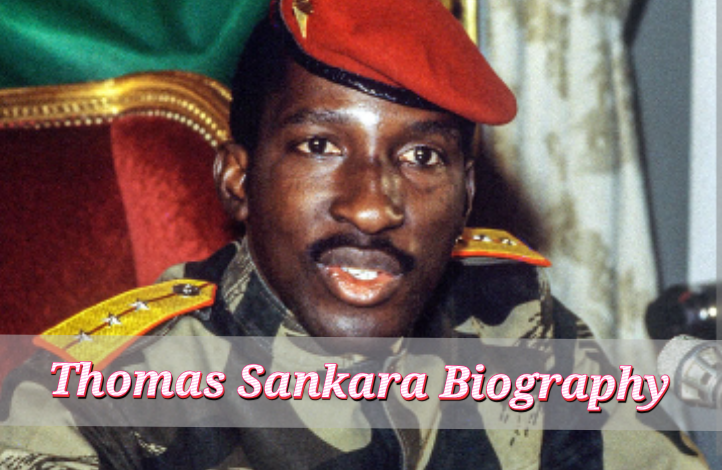
Thomas Sankara Biography
Thomas Sankara was a key figure in African history. He led Burkina Faso as its president from 1983 to 1987. Known for his strong ideas against imperialism, he worked to make his country independent and fair for all people. Sankara changed the nation’s name from Upper Volta to Burkina Faso, which means “land of upright people.” This name showed his goal for honest leadership. He focused on helping the poor, improving health, and protecting the environment. His time in power was short, but his ideas still inspire many today.
Sankara grew up during a time when Africa was fighting for freedom from colonial rule. Upper Volta was a French colony until 1960. Sankara saw the problems left by colonialism, like poverty and unfair systems. These experiences shaped his views. He became a military officer and a revolutionary thinker. People often call him “Africa’s Che Guevara” because of his bold style and commitment to change.
Sankara believed in Pan-Africanism, which means unity among African nations. He spoke against foreign control and debt that kept countries poor. In his speeches, he urged Africans to rely on themselves. For example, he said ideas cannot be killed, even if people are. His government started programs to plant trees, build schools, and vaccinate children. These efforts improved life for many in Burkina Faso.
Despite his achievements, Sankara faced opposition. Some leaders disagreed with his fast changes. On October 15, 1987, he was killed in a coup led by his former friend, Blaise Compaore. After his death, many reforms were undone. But his legacy lives on. Today, young leaders in Africa look to Sankara for inspiration. Books, films, and songs keep his story alive. This article will cover his early life, career, personal life, the events around his death, and more. It aims to teach readers about this important leader in simple terms.
Sankara’s story shows how one person can push for big changes. He fought for equality, especially for women and farmers. His anti-corruption stance made him popular among the common people. In a world where leaders often seek personal gain, Sankara lived simply. He reduced his own salary and encouraged others to do the same. This honesty earned him respect worldwide.
To understand Sankara, we must look at the context of his time. Africa in the 1980s faced debt crises and foreign influence. Sankara challenged this at the United Nations and other places. His vision was for a self-reliant Africa. Though his rule ended tragically, his principles guide movements for justice today. As we explore his life, remember his motto: “Fatherland or death, we will win.”
Thomas Sankara Early Life
Thomas Isidore Noel Sankara was born on December 21, 1949, in Yako, a town in what was then French Upper Volta. This area is now part of Burkina Faso. He was the third child in a family of ten. His father, Joseph Sankara, worked as a police officer and had served in the French army during World War II. His mother, Marguerite Sankara, took care of the home. The family had a mix of Mossi and Fulani roots, which are common ethnic groups in the region.
Growing up, Sankara lived in a modest home. His father’s job gave the family some stability, but the country was poor. Upper Volta relied on France for many things. Sankara saw how colonial rule affected daily life. In 1960, when he was 11 years old, Upper Volta gained independence. This event sparked his interest in politics and freedom.
As a boy, Sankara did well in school. He attended primary school in Gaoua and then secondary school in Bobo-Dioulasso. His parents were Catholic and hoped he would become a priest. But Sankara chose a different path. He liked reading about history and leaders who fought for change. Books on revolutions influenced him early on.
In 1966, at age 17, Sankara joined the military academy in Ouagadougou. There, he trained as a soldier. He also studied in Madagascar from 1970 to 1973. In Madagascar, he learned about Marxist ideas and Pan-African leaders like Kwame Nkrumah. These teachings shaped his views on equality and self-rule.
During his time in the military, Sankara saw coups in Upper Volta. The first one happened in 1966, led by Sangoule Lamizana. These events showed him the instability in his country. Sankara became friends with other young officers who wanted change. He also played guitar and enjoyed music, which helped him connect with people.
Sankara’s early years taught him about hardship and injustice. He witnessed poverty and corruption. These experiences made him determined to help his people. By the 1970s, he was active in unions and groups fighting for workers’ rights. His background prepared him for a life of leadership and reform.
Thomas Sankara Career
Sankara’s career started in the military. After training, he returned to Upper Volta in 1973 as a lieutenant. He quickly gained respect for his skills and ideas. In 1976, he fought in a border war with Mali. His bravery there made him popular.
By the late 1970s, Sankara connected with leftist groups. He befriended Blaise Compaore and others who shared his views. In 1981, he became Secretary of State for Information in a new government. But he resigned in 1982, protesting repression. He said, “Woe to those who gag the people.” This bold move increased his fame.
In January 1983, a coup made him Prime Minister under President Jean-Baptiste Ouedraogo. As Prime Minister, he pushed for reforms. But tensions grew, and he was arrested in May 1983. His supporters, led by Compaore, freed him in August 1983. On August 4, 1983, Sankara led a coup and became President.
As President, Sankara started big changes. He renamed the country Burkina Faso on August 4, 1984. This symbolized a break from the past. He formed the National Council for the Revolution to govern.
Sankara focused on self-reliance. He rejected loans from the IMF and World Bank, saying they created dependency. Instead, he promoted local farming. His government built dams and wells for water. They planted over 10 million trees to stop desert spread.
Health was a priority. In 1984, a vaccination drive immunized 2.5 million children against diseases like measles. Literacy rates rose from 13 percent to 73 percent by 1987 through education campaigns.
Sankara supported women’s rights. He banned forced marriages and polygamy. Women joined the government and military. He said women hold up half the sky.
In foreign policy, Sankara backed liberation groups in South Africa and Palestine. He spoke at the UN in 1984 against apartheid. He allied with Cuba and Libya for support.
Anti-corruption was key. Sankara cut salaries for officials, including his own. He sold luxury cars and used cheap vehicles. Tribunals tried corrupt leaders.
His reforms helped the economy. Food production increased, reducing hunger. But some changes caused unrest. Labor unions sometimes clashed with the government.
Sankara’s career showed dedication to his people. He worked tirelessly for four years. His ideas on Pan-Africanism and anti-imperialism influenced many.
Thomas Sankara Personal Life
Sankara lived a simple life. He married Mariam Sankara in 1975. They had two sons, Philippe and Auguste. Mariam supported his work and shared his values.
As president, Sankara avoided luxury. He wore military uniforms and rode a bicycle to work sometimes. His home was basic, without fancy items. He believed leaders should live like the people they serve.
Sankara enjoyed music. He played guitar in a band called “Tout-a-Coup Jazz.” This hobby helped him relax and connect with youth.
He was a devoted father. Despite busy schedules, he spent time with his children. Family was important to him.
Sankara’s faith was Catholic, but he focused more on social justice than religion in public. His personal choices reflected his commitment to equality.
After his death, Mariam moved to France with the children for safety. She later returned to advocate for justice in his case.
Thomas Sankara Assassination and Aftermath
On October 15, 1987, Sankara was killed in Ouagadougou during a coup. He was at a meeting when armed men attacked. Twelve others died too. The attackers were led by Blaise Compaore, his former ally.
Reasons for the coup included disagreements over policy. Compaore had ties to France and Ivory Coast. Some believe foreign powers helped, but this is not proven.
After the coup, Compaore became president. He ruled until 2014. Many of Sankara’s reforms were reversed. The country faced economic issues again.
In 2015, Sankara’s body was exhumed for investigation. A trial started in 2021. In 2022, Compaore was convicted in absentia for the murder. This brought some closure.
The assassination shocked Africa. Protests happened in Burkina Faso. In 2014, uprisings forced Compaore out, invoking Sankara’s name.
Today, memorials honor Sankara. His death highlighted the risks of challenging powerful interests.
Conclusion
Thomas Sankara was a visionary leader who fought for a better Africa. From his birth in 1949 to his death in 1987, he dedicated his life to justice and self-reliance. His reforms in health, education, and women’s rights changed Burkina Faso. Though his time was short, his ideas endure.
Sankara taught that true leadership means serving the people. He challenged imperialism and corruption. Today, movements in the Sahel region draw from his example.
His legacy reminds us to strive for equality. As Sankara said, revolutionaries can be killed, but ideas live on. Readers can learn from his story and apply his principles in their lives.
FAQs
What is Thomas Sankara known for?
Thomas Sankara is known for leading the revolution in Burkina Faso from 1983 to 1987. He promoted self-reliance, fought corruption, and improved social services like health and education.
How did Thomas Sankara die?
He died on October 15, 1987, during a coup in Ouagadougou. Armed men shot him and others at a meeting.
Why was Thomas Sankara assassinated?
The assassination stemmed from internal conflicts and policy differences. Blaise Compaore led the coup, possibly with external support.
What were Thomas Sankara’s achievements?
His achievements include vaccinating millions, planting trees, raising literacy, and advancing women’s rights. He also renamed the country and rejected foreign debt.
Is Thomas Sankara a hero?
Many see him as a hero for his honest leadership and fight against injustice. His legacy inspires activists worldwide.
What influenced Thomas Sankara?
He was influenced by Marxist ideas, Pan-African leaders, and his experiences under colonialism.
How did Thomas Sankara come to power?
He came to power through a coup on August 4, 1983, after serving as Prime Minister.
What was Thomas Sankara’s ideology?
His ideology was Marxist, Pan-Africanist, and anti-imperialist, focusing on equality and independence.