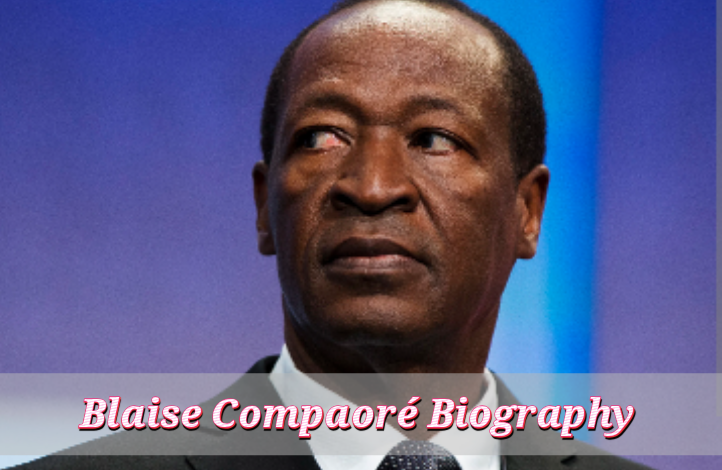
Blaise Compaoré Biography
Blaise Compaoré is a key figure in the history of Burkina Faso, a country in West Africa. He served as president from 1987 to 2014, making him the longest-serving leader in the nation’s history. His time in power started with a coup and ended with public protests. Born into a Mossi family, Compaoré rose through the military ranks and became involved in major political changes. He was once a close friend of Thomas Sankara, Burkina Faso’s revolutionary leader, but their relationship turned tragic. Compaoré’s rule brought some economic growth and regional peace efforts, yet it faced criticism for human rights issues and corruption claims. Today, as of March 2026, he lives in exile in Ivory Coast, after receiving a life sentence in absentia for Sankara’s murder in 2022. This article looks at his life to help readers understand his role in Burkina Faso’s story. It covers his early years, career path, controversies, personal details, and legacy. By learning about Compaoré, we can see how one person’s choices affect a whole country and region.
His story touches on themes like power, friendship, and change in African politics. Burkina Faso, once called Upper Volta, has faced many challenges, including poverty and security issues. Compaoré tried to address some of these, but his methods sparked debate. As we explore his life, keep in mind the broader context of West African history, where coups and leadership shifts are common. This introduction sets the stage for a deeper look into who Blaise Compaoré really is.
Blaise Compaoré Early Life
Blaise Compaoré was born on February 3, 1951, in Ouagadougou, which was then part of Upper Volta under French rule. He grew up in Ziniaré, a town near the capital. As a member of the Mossi ethnic group, one of the largest in the area, he experienced a typical childhood in a family-focused community. His parents, Tiga Thérèse Bougouma and Bila Maurice Compaoré, raised him as the oldest of seven children. They lived between Ziniaré and Boromo, giving young Blaise a mix of rural and urban life.
His father served in World War II against Nazi Germany and returned home in 1947, which inspired Blaise. This military background likely influenced his future path. Compaoré admired his dad’s bravery and stories from the war. Growing up in a Catholic family, he learned values like discipline and hard work.
For education, Compaoré went to military school in Yaoundé, Cameroon. He later received special training as a paracommando in Rabat, Morocco. These experiences built his skills in leadership and combat. At age 20, in 1971, he joined the Upper Volta Armed Forces. He quickly moved up the ranks due to his dedication.
His early life shaped him into a quiet, reserved person. Friends described him as balanced and thoughtful. This period laid the foundation for his military career and entry into politics. Understanding his roots helps explain his later decisions in power.
Blaise Compaoré Career
Blaise Compaoré’s career began in the military and led to high-level politics. From 1978 to 1981, he led sections and companies in the paracommando regiment. In 1981, he took charge of the national commando training center in Po. This role increased his influence in the army.
He met Thomas Sankara early on, and they became close friends. In 1982, Sankara quit his government job in protest, pulling Compaoré into politics. The next year, on August 4, 1983, Compaoré helped lead a coup that put Sankara in power, with support from Ghana and Libya. He served as minister of state at the presidency from 1983 to 1987, making him second in command. He also held the justice minister post from 1985 to 1987.
On October 15, 1987, a coup led by Compaoré ousted Sankara, who died in the event. Compaoré became president and formed the Popular Front. He executed rivals like Jean-Baptiste Lingani and Henri Zongo in 1989 for alleged plots.
As president, he shifted from Sankara’s socialist ideas to market-friendly policies, working with the IMF and World Bank. He founded the Congress for Democracy and Progress in 1996 and won elections in 1991, 1998, 2005, and 2010, though some called them unfair.
He focused on education, health, and women’s rights. Infrastructure improved under his rule. Regionally, he mediated conflicts in Togo and Ivory Coast. However, he faced accusations of supporting rebels in Liberia and Sierra Leone.
In 2011, military mutinies over pay challenged his rule. His attempt to change term limits in 2014 led to protests, forcing his resignation on October 31, 2014. He fled to Ivory Coast.
His career shows a mix of stability and control. He ruled for 27 years, influencing Burkina Faso’s path.
Blaise Compaoré Controversies
Blaise Compaoré’s time in power included many disputes. The biggest was his role in Thomas Sankara’s death on October 15, 1987. Sankara, a popular leader, was killed in a coup that brought Compaoré to power. In 2022, a court sentenced Compaoré to life in prison for complicity in the murder, though he was not there. He denied planning it and said Sankara died unexpectedly.
Another issue was the killing of journalist Norbert Zongo on December 13, 1998. Zongo investigated government corruption, sparking protests. Compaoré’s regime faced blame for suppressing press freedom.
Human rights groups criticized his rule for political repression. In 1989, he ordered executions of alleged plotters. Elections were seen as rigged, limiting opposition.
Regionally, he was accused of aiding Charles Taylor in Liberia’s civil war and rebels in Sierra Leone. Ties to Muammar Gaddafi drew scrutiny.
In 2011, mutinies and protests highlighted unrest over pay and governance. His 2014 bid to extend terms led to his ouster.
In 2022, he apologized to Sankara’s family and briefly returned for talks on July 7, 2022. As of 2026, pressure on his associates continues under the current junta.
These events paint a picture of a leader admired by some for stability but criticized by others for authoritarian ways.
Blaise Compaoré Personal Life
Blaise Compaoré keeps his personal life private. He married Chantal Compaoré, who is Franco-Ivorian. They have a daughter named Djamila Imani. Chantal often appeared with him at events and supported causes like women’s rights.
He is known as reserved and enjoys dancing, such as rumba and rock. Nicknamed “Handsome Blaise,” he has a calm demeanor.
His family includes brother François Compaoré, involved in politics. In exile since 2014, he lives in Abidjan, Ivory Coast, where he gained citizenship in 2016. He reportedly feels homesick.
Recent events include the murder of former minister Yolande Viviane Compaoré on January 10, 2026, though her relation to him is unclear. His personal story reflects the ups and downs of his public life.
Conclusion
Blaise Compaoré’s life leaves a mixed legacy in Burkina Faso. He brought some economic progress and helped with regional peace, but his rule faced charges of repression and corruption. His 27-year presidency stabilized the country after turbulent times, yet it ended in protests over term limits.
Positive aspects include:
- Economic shifts to market policies that boosted growth.
- Improvements in education and health services.
- Mediation in West African conflicts.
Negative aspects include:
- Involvement in Sankara’s 1987 murder.
- Suppression of dissent, like the 1998 Zongo case.
- Support for foreign rebels.
As of March 2026, he remains in exile, with ongoing legal issues. Burkina Faso still deals with insurgency and instability, partly linked to his era. His story teaches about power’s risks and the need for fair leadership. Future generations may view him as a complex figure in African history.
FAQs
Who is Blaise Compaoré?
Blaise Compaoré is a former military officer and politician who led Burkina Faso as president from 1987 to 2014. He is known for his long rule and controversial rise to power.
When did Blaise Compaoré become president of Burkina Faso?
He became president on October 15, 1987, after a coup that removed Thomas Sankara.
How did Blaise Compaoré come to power?
Compaoré came to power through a military coup on October 15, 1987, where Sankara was killed. He had been Sankara’s deputy before that.
What major changes did he make as president?
He moved from socialist policies to market reforms, aligned with international lenders, and focused on infrastructure and social programs.
Why did some people criticize his leadership?
Critics pointed to human rights abuses, election rigging, and his role in Sankara’s death.
What led to Blaise Compaoré leaving the presidency?
Protests against his attempt to extend term limits forced his resignation on October 31, 2014.