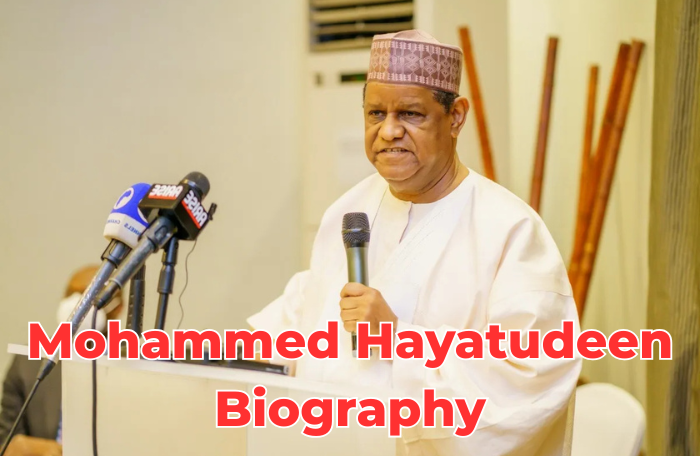
Mohammed Hayatudeen Biography: Early Life, Career, Politics, Family, and Net Worth
Mohammed Hayatudeen Biography
Nigeria has produced many influential economists, bankers, and public figures, but few have combined corporate leadership, economic policy expertise, and political ambition as successfully as Mohammed Hayatu-Deen. Over the years, he has earned recognition as a respected technocrat, turnaround specialist, and statesman, with a career spanning banking, public administration, private investment, and national development initiatives.
Advertisements
From transforming a struggling financial institution into one of Nigeria’s notable banking success stories to becoming a prominent voice in national politics, Mohammed Hayatudeen’s journey reflects decades of leadership and influence. His name has frequently appeared in conversations about economic reform, governance, and Nigeria’s future direction.
This article takes a detailed look at Mohammed Hayatudeen’s biography, including his early life, education, professional achievements, political ambitions, family background, religion, and net worth. It also examines his contributions to Nigeria’s banking industry and public policy landscape.
Who Is Mohammed Hayatudeen?
Mohammed Hayatu-Deen is a Nigerian economist, banker, businessman, policy strategist, and politician. He is best known for his leadership role at FSB International Bank Plc, where he successfully transformed the institution from a distressed savings bank into a thriving commercial bank.
Beyond banking, he has played major roles in economic advisory bodies, corporate boards, and national development programs in Nigeria. Over the years, he became recognized as one of the country’s influential technocrats with extensive experience in both the public and private sectors.
He has also participated actively in Nigerian politics, seeking to contribute to national governance through policy-based leadership and economic reform advocacy.
Advertisements
Mohammed Hayatudeen’s Early Life and Background
Mohammed Hayatudeen was born in northern Nigeria, a region that strongly influenced his worldview and leadership philosophy. Although details about his exact birth date remain relatively private, he is widely known to have grown up during a period when Nigeria was undergoing major political and economic transformation.
His upbringing exposed him to the realities of governance, education challenges, economic inequality, and regional development. These experiences later shaped many of his views on public policy and nation-building.
Coming from northern Nigeria also gave him firsthand insight into the region’s issues, including poverty, insecurity, educational setbacks, and unemployment. In many of his public speeches, he has emphasized the importance of inclusive economic growth and social stability.
Educational Background
Mohammed Hayatudeen attended Ahmadu Bello University, where he earned a degree in Economics.
His academic foundation in economics became instrumental in shaping his professional career. Over time, he also attended executive education programs at globally respected institutions, including:
These advanced programs strengthened his expertise in leadership, strategic management, finance, and corporate governance.
His educational exposure positioned him among Nigeria’s highly trained economic and financial experts.
Career Journey
Early Professional Career
Before becoming widely known in banking circles, Mohammed Hayatudeen worked in both public administration and corporate management. He gained extensive experience in economic planning, industrial management, and the implementation of strategic policy.
One of his major early career roles was with the New Nigeria Development Company, commonly known as NNDC. There, he reportedly rose to top executive positions and managed a broad portfolio of investments and companies.
His work in the development sector gave him practical experience in industrial restructuring, investment management, and economic administration.
Leadership at FSB International Bank
Mohammed Hayatudeen became nationally prominent during his tenure as Managing Director and later Chairman of FSB International Bank Plc.
At the time he assumed leadership, the bank was reportedly struggling financially. Under his management, the institution underwent major restructuring and modernization. The transformation became one of Nigeria’s most notable banking turnaround stories.
His leadership reportedly helped reposition the bank into a successful commercial institution capable of competing within Nigeria’s evolving financial sector.
Eventually, FSB International Bank became part of Fidelity Bank Plc through acquisition and consolidation.
The success of the restructuring elevated Mohammed Hayatudeen’s reputation as a skilled banker and corporate strategist.
Contributions to Nigeria’s Economic Development
Over the years, Mohammed Hayatudeen participated in several economic and policy advisory initiatives in Nigeria.
He served as Chairman of the Nigerian Economic Summit Group for two terms.
The Nigerian Economic Summit Group, often referred to as NESG, is one of the country’s influential policy and private-sector advocacy organizations. Through the group, Hayatudeen contributed to discussions on economic reforms, private-sector development, investment growth, and governance.
He also participated in national policy structures such as:
- Presidential Advisory Council
- National Council on Privatization
- Vision 2010 initiatives
- Economic transition committees
His involvement in these institutions reinforced his reputation as a technocrat with strong expertise in economic planning and institutional reform.
Business Investments and Entrepreneurship
Beyond banking and public policy, Mohammed Hayatudeen also ventured into private investments and infrastructure development.
He founded the Alpine Group, an investment and development company involved in large-scale commercial projects.
One of the group’s most recognized developments was the Ado Bayero Mall in Kano, reportedly valued at over $100 million. The project became one of northern Nigeria’s most prominent modern retail and commercial centres.
The development reflected his broader interest in economic expansion, infrastructure investment, and job creation.
Mohammed Hayatudeen and Politics
Although many Nigerians initially knew him as a banker and economist, Mohammed Hayatudeen later entered active politics.
In 2022, he declared his intention to contest Nigeria’s presidential election under the Peoples Democratic Party (PDP).
His campaign focused heavily on:
- Economic recovery
- Institutional reform
- Security challenges
- Governance improvement
- National unity
Hayatudeen consistently argued that Nigeria needed competent economic leadership and stronger institutions.
Although he did not become the PDP presidential candidate, his entry into politics expanded his national visibility and positioned him as one of Nigeria’s respected technocratic political voices.
Joining the African Democratic Congress (ADC)
In recent years, Mohammed Hayatudeen became associated with the African Democratic Congress (ADC).
Reports in 2026 indicated that he joined the party as part of efforts to build an alternative political movement focused on governance reform and economic transformation.
He has publicly emphasized the need for:
- Strong institutions
- Economic productivity
- National trust-building
- Security reform
- Inclusive governance
His speeches frequently centre on restructuring governance systems rather than relying solely on political personalities.
Leadership Philosophy
Mohammed Hayatudeen is widely regarded as a policy-oriented leader who prefers strategic planning and institutional solutions.
One of the recurring themes in his public engagements is the importance of strong institutions over “strong men” in politics.
He has repeatedly argued that sustainable national progress depends on:
- Efficient governance
- Economic productivity
- Accountability
- Citizen participation
- Long-term planning
His leadership style reflects his background in banking, economic management, and corporate governance.
Humanitarian and Educational Initiatives
Apart from business and politics, Mohammed Hayatudeen has also been involved in social development efforts.
He chairs the Renaissance Development Forum, which supports educational and reconstruction initiatives, especially in northern Nigeria.
The organization has reportedly focused on:
- Tackling out-of-school children’s issues
- Supporting reconstruction in conflict-affected areas
- Educational interventions
- Community development
These initiatives align with his long-standing advocacy for human capital development and national rebuilding.
Mohammed Hayatudeen Religion
Mohammed Hayatudeen is a Muslim from northern Nigeria, where Islam is widely practiced.
Throughout his public life, he has emphasized unity, tolerance, and inclusive national development rather than divisive religious politics.
In many of his speeches, he advocates for a Nigeria where citizens from different ethnic and religious backgrounds can coexist peacefully and prosper equally.
Mohammed Hayatudeen Family
Mohammed Hayatudeen is known to keep much of his personal and family life private.
Unlike many public figures who constantly share family matters publicly, he maintains a relatively low profile regarding his wife, children, and extended family.
However, he has occasionally referenced family experiences while discussing insecurity and national challenges in Nigeria.
His reserved approach to family matters has contributed to his reputation as a disciplined and professional public figure.
Awards and Recognition
Mohammed Hayatudeen has received several honours and recognitions for his contributions to banking, business, and national development.
One of his most notable recognitions is the national honour of:
- Order of the Niger (OON)
He reportedly received the award from former Nigerian President Olusegun Obasanjo in recognition of his contributions to the country.
His banking achievements and public service roles have also earned him respect within Nigeria’s corporate and policy circles.
Mohammed Hayatudeen Net Worth
Mohammed Hayatudeen’s exact net worth is not publicly confirmed. However, estimates place him among Nigeria’s wealthy business and banking figures due to his long career in finance, investments, and corporate leadership.
His wealth is believed to come from:
- Banking leadership roles
- Corporate board memberships
- Investment ventures
- Real estate projects
- Business development initiatives
His involvement in major commercial projects, such as Ado Bayero Mall, and in investment activities through Alpine Group likely contributed significantly to his financial success.
Despite his business success, he is often viewed more as a technocrat and policy strategist than a flamboyant billionaire businessman.
Mohammed Hayatudeen’s Influence in Nigeria
Over several decades, Mohammed Hayatudeen built a reputation as one of Nigeria’s respected economic thinkers and advocates of institutional reform.
His influence cuts across:
- Banking
- Economic policy
- Corporate governance
- Politics
- Public administration
He is frequently invited to speak on national issues involving governance, economic recovery, investment, and institutional reform.
Many Nigerians see him as part of a generation of technocrats attempting to bridge the gap between private-sector efficiency and public-sector leadership.
Key Facts About Mohammed Hayatudeen
| Category | Details |
|---|---|
| Full Name | Mohammed Hayatu-Deen |
| Nationality | Nigerian |
| Profession | Economist, Banker, Politician, Businessman |
| Religion | Islam |
| University | Ahmadu Bello University |
| Known For | Banking leadership and economic policy |
| Former Position | Chairman/CEO of FSB International Bank |
| Political Affiliation | PDP (formerly), ADC |
| National Honor | Order of the Niger (OON) |
| Major Business | Alpine Group |
| Notable Project | Ado Bayero Mall |
Frequently Asked Questions (FAQs)
Who is Mohammed Hayatudeen?
Mohammed Hayatudeen is a Nigerian economist, banker, businessman, and politician known for transforming FSB International Bank and for contributing to the development of Nigeria’s economic policy.
What is Mohammed Hayatudeen known for?
He is widely recognized for restructuring FSB International Bank, serving in economic advisory roles, and for his participation in Nigerian politics.
Where is Mohammed Hayatudeen from?
He is from northern Nigeria.
What did Mohammed Hayatudeen study?
He studied Economics at Ahmadu Bello University and later attended executive programs at Harvard Business School, London Business School, and INSEAD.
Is Mohammed Hayatudeen a politician?
Yes. He entered Nigerian politics and contested the presidency under the Peoples Democratic Party before later joining the African Democratic Congress in 2026.
What is Mohammed Hayatudeen’s religion?
He is a Muslim.
What businesses does Mohammed Hayatudeen own?
He founded Alpine Group, an investment and development company involved in major commercial projects.
What is Mohammed Hayatudeen’s net worth?
His exact net worth is publicly unknown, but he is believed to be financially successful due to decades of experience in banking, investments, and corporate leadership.
Did Mohammed Hayatudeen receive any national honour?
Yes. He received the Order of the Niger (OON), one of Nigeria’s prestigious national honours.
What political party is Mohammed Hayatudeen associated with?
He was formerly associated with the People’s Democratic Party and later joined the African Democratic Congress.
Conclusion
Mohammed Hayatu-Deen remains one of Nigeria’s respected voices in banking, economic policy, and institutional reform. His career reflects decades of experience across finance, governance, business development, and national advisory roles.
From rescuing a struggling bank to participating in national economic discussions and presidential politics, Hayatudeen has consistently positioned himself as a leader focused on structural growth and long-term development.
Although he maintains a relatively private personal life, his public contributions continue to attract attention from business leaders, policymakers, and political observers across Nigeria. Whether in banking, economic planning, or political engagement, Mohammed Hayatudeen’s legacy is closely tied to conversations about leadership, reform, and Nigeria’s future.