Major Mohit Sharma Biography: Early Life, Age, Career, Personal Life & Education

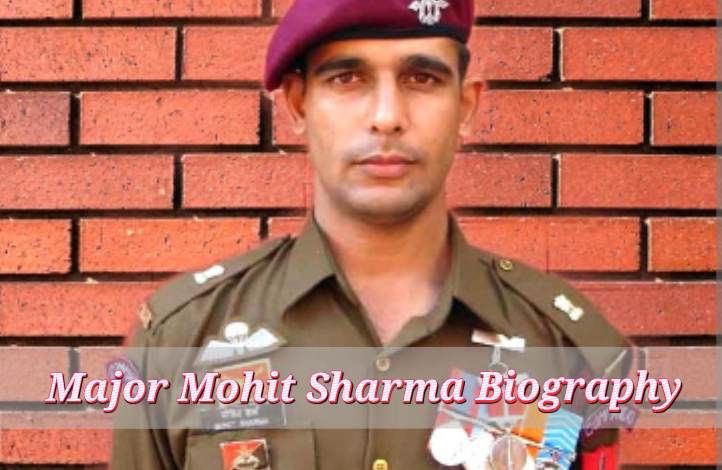
Major Mohit Sharma Biography
Major Mohit Sharma was an officer in the Indian Army who served with great courage. He belonged to the elite 1 Para Special Forces unit. Major Mohit Sharma was born on 13 January 1978 and died on 21 March 2009 while fighting terrorists. The government gave him the Ashoka Chakra award after his death. This is the highest bravery award given in times of peace in India. His life shows what it means to serve the nation with full dedication. People remember him for his undercover work and his final act of bravery. In this article, you will learn about his early days, his time in the army, the awards he received, his family, and why his story matters. We will use simple facts with dates so you can understand his journey easily. His example teaches young readers about duty, teamwork, and sacrifice. Let us explore the life of this true hero step by step.
Major Mohit Sharma Early Life and Education
Major Mohit Sharma grew up in a simple family. He was born on 13 January 1978 in Rohtak district of Haryana. His father was Rajendra Prasad Sharma and his mother was Sushila Sharma. He was the second child in the family. At home, everyone called him Chintu. The family later moved to areas near Delhi and Ghaziabad in Uttar Pradesh. This change helped him get good schooling.
He started his studies at Manav Sthali School in South Extension, Delhi. After that, he studied for one year at Holy Angels School in Sahibabad. Then he joined Delhi Public School in Ghaziabad. He completed class 12 there in 1995. During school, he was active in many activities. He enjoyed sports like horse riding, swimming, and boxing. He also loved music and could play the guitar and mouth organ well. These hobbies kept him fit and creative.
After school, his parents sent him to Shri Sant Gajanan Maharaj College of Engineering in Shegaon, Maharashtra. He began engineering studies there. At the same time, he applied for the National Defence Academy entrance exam. He cleared the test and joined the National Defence Academy in December 1995. He left engineering because he wanted to serve in the army. This choice changed his life. At the academy, his friends called him Mike. He trained hard and learned discipline, leadership, and physical skills. These early years built the strong base for his future career. Many young people today can learn from his decision to follow his passion for service instead of a regular job.
Major Mohit Sharma Career
Major Mohit Sharma began his army life after training. He passed out from the Indian Military Academy and received his commission on 11 December 1999. The army gave him service number IC-59066N. He joined the 5 Madras Regiment as a lieutenant. His first posting was in Hyderabad. There he learned basic duties and worked with his unit.
Soon he moved to Jammu and Kashmir. He served with 38 Rashtriya Rifles as part of counter insurgency operations. In 2002, he received the Chief of Army Staff Commendation Medal for his work in Operation Rakshak. This showed his early skill in tough situations.
He always dreamed of joining special forces. In December 2002, he applied for the Para Regiment. He cleared the difficult probation and joined 1 Para Special Forces in June 2003. Special Forces units train for secret missions, quick attacks, and rescue work. They work in small teams in forests and hills. The training is very hard and tests both body and mind. He became a trained Para Commando. On 11 December 2005, he was promoted to the rank of Major.
One of his important tasks came in 2004. Major Mohit Sharma took part in a secret operation against the Hizbul Mujahideen group. He changed his look and used the name Iftikhar Bhatt. He grew a beard and dressed like a local young man from Kashmir. He lived among the group for some time. He collected key information and helped the army target top leaders. He played a role in actions against two commanders named Abu Torara and Abu Sabzar. For this brave undercover work, he received the Sena Medal for gallantry. This operation proved his ability to take big risks for the country.
His final mission took place in 2009. His unit was posted in Kupwara district of Jammu and Kashmir. On 21 March 2009, they received information about terrorists hiding in the dense Hafruda forest. Major Mohit Sharma led the Bravo Assault Team. The team moved into the thick forest to find the terrorists. Suddenly, the terrorists opened fire from three sides. Four commandos in his team got wounded.
Major Mohit Sharma did not think about his own safety. He crawled forward under heavy shooting. He brought two injured soldiers back to a safe place. He fought back and killed four terrorists in close combat. During the fight, he received multiple gunshot wounds, including one in the chest. Even after getting hurt, he kept guiding his team on the radio. He told them not to stop firing and to make sure the terrorists did not escape. His actions saved more lives that day. He died from his injuries at the age of 31. This operation in Hafruda forest became a symbol of courage. Special Forces like 1 Para train soldiers exactly for such moments. They learn to stay calm and lead even when hurt. Major Mohit Sharma followed this training till his last breath. His career shows how one officer can make a big difference through planning, bravery, and teamwork. Young army aspirants can take inspiration from his path from regular regiment to elite forces.
Major Mohit Sharma Awards
Major Mohit Sharma received several honours during and after his service. These awards recognise bravery, leadership, and sacrifice. Let us look at them one by one.
First, he got the Chief of Army Staff Commendation Medal in 2002. This came for his counter insurgency work in Jammu and Kashmir during Operation Rakshak. It is a unit level honour that appreciates good performance in difficult areas.
Next, he received the Sena Medal for gallantry in 2004. This medal is given for outstanding courage in operations. It was for his undercover mission where he used the name Iftikhar Bhatt and helped neutralise high value targets.
The highest award came after his death. On 26 January 2010, the President of India gave him the Ashoka Chakra. This is the top peacetime gallantry award in the country. It is equal to the Param Vir Chakra but given when the nation is not at war. The citation mentions his conspicuous gallantry, inspiring leadership, and supreme sacrifice on 21 March 2009. His wife received the award on his behalf. These awards are not just medals. They remind everyone of the risks army officers take every day. They also encourage new soldiers to aim high. Major Mohit Sharma earned them through real actions on the ground. No other details are needed because the facts speak for themselves.
Major Mohit Sharma Personal Life
Major Mohit Sharma had a loving family. He married Rishima Sarin before his final posting. She is now Lieutenant Colonel Rishima Sharma and serves in the Army Service Corps. She joined the army in 2001. Her father is a retired colonel from the same corps. The couple had two children. Family members say Major Mohit was a caring husband and father. He balanced army duties with home life whenever possible.
His parents, Rajendra Prasad Sharma and Sushila Sharma, and his elder brother Madhur Sharma supported him always. After his death, the family stayed strong. Lieutenant Colonel Rishima Sharma continued her service and raised the children. She received the Ashoka Chakra from the President. This shows how army families share the pride and pain of service. Major Mohit Sharma lived a simple life focused on duty. He did not seek fame. His personal side reminds us that behind every brave soldier is a family that stands with him.
Conclusion
Major Mohit Sharma lived a short but meaningful life. From his birth on 13 January 1978 in Rohtak to his death on 21 March 2009 in Kupwara, he gave everything to the nation. He moved from school in Ghaziabad to the National Defence Academy, then to 5 Madras Regiment, and finally to 1 Para Special Forces. His undercover work earned the Sena Medal in 2004. His final act in Hafruda forest earned the Ashoka Chakra in 2010. He saved soldiers and fought till the end. His story teaches simple lessons: follow your duty, train hard, and put the country first. Thousands of young Indians join the army because of heroes like him. His legacy lives through his family and the soldiers he inspired. We honour him by remembering his facts and learning from his example. True heroes like Major Mohit Sharma make India stronger every day.
FAQs
How did Major Mohit Sharma die?
Major Mohit Sharma died on 21 March 2009 during a counter terrorism operation in Hafruda forest of Kupwara district in Jammu and Kashmir. He led his team against terrorists. He rescued two wounded soldiers and killed four terrorists. He received multiple gunshot wounds including one in the chest. He continued to guide his men even after getting hurt. He succumbed to his injuries at the age of 31. Official records confirm these events from the operation report.
What awards did Major Mohit Sharma receive?
He received three main awards. In 2002, he got the Chief of Army Staff Commendation Medal for work in Operation Rakshak. In 2004, he received the Sena Medal for gallantry after an undercover mission. On 26 January 2010, he was given the Ashoka Chakra posthumously. His wife received this highest peacetime award. These honours mark his bravery at different stages of his career.
Was Major Mohit Sharma married and did he have children?
Yes, Major Mohit Sharma was married to Lieutenant Colonel Rishima Sharma. She serves in the Army Service Corps. The couple had two children. His wife received the Ashoka Chakra on his behalf in 2010. Family records confirm these details.
What unit was Major Mohit Sharma part of?
He started with 5 Madras Regiment after commissioning in 1999. Later he joined 38 Rashtriya Rifles. In June 2003, he became part of 1 Para Special Forces. He served in this elite unit till his death in 2009. The Para Special Forces are known for tough missions in difficult areas.
Who was Iftikhar Bhatt in relation to Major Mohit Sharma?
Iftikhar Bhatt was the secret identity Major Mohit Sharma used in 2004. He grew a beard and lived among militants to gather information. This helped the army act against top targets. He received the Sena Medal for this work. It was a real undercover operation, not a story.
Why is Major Mohit Sharma remembered today?
People remember him for his courage in both secret and open operations. He saved lives in his final mission even after being wounded. His Ashoka Chakra shows the nation values such sacrifice. Schools and army units study his example to teach duty. His family and fellow soldiers keep his memory alive through facts and tributes.